
Cosmetics & Skincare Insights
Industry news, formulation innovations, and contract manufacturing guides.
Formulation & Color Trends
Custom lipstick, skincare, and color cosmetic formulation trends.
Technology & Innovation
State-of-the-art automation and cGMP production standards.
Custom Molds & Tooling
Proprietary packaging and tooling solutions for beauty brands.
Turnkey Beauty Solutions
Full-service manufacturing from concept to retail packaging.
2026 Best Eye Makeup Contract Manufacturers?
Table of Contents
- What Are Eye Makeup Contract Manufacturers and What Do They Produce?
- How to Evaluate Eye Makeup Manufacturers for Quality and Compliance
- Which Manufacturing Capabilities Matter for Eye Makeup Brands in 2026?
- How Do Costs, Minimum Orders, and Lead Times Compare?
- How to Choose the Best Contract Manufacturer for Your Eye Makeup Line
- FAQS
- Conclusion
- Related Posts
The 2026 Best Eye Makeup Contract Manufacturers? This question deserves more than a polished supplier list. Eye Makeup Contract Manufacturing now involves shade development, pigment dispersion, packaging compatibility, stability testing, and dependable production planning. A black eyeliner may look smooth in the first sample, yet crack after weeks in a warm warehouse. A shimmer shadow may sparkle beautifully, but leave unacceptable fallout on the cheek.
Cosmetic chemist and educator Perry Romanowski has emphasized, “The most important part of cosmetic formulation is safety.” That principle remains practical, not decorative. Reliable manufacturers should demonstrate controlled batching, documented quality procedures, appropriate microbial testing, and clear ingredient traceability. They should also explain their limits. Honest answers are often more valuable than impressive promises.
This guide examines manufacturers through formulation capability, minimum order quantities, customization, filling precision, packaging options, and communication quality. It also considers whether a supplier can support sensitive eye-area products without weakening performance. Details matter. Ask how they test mascara drying, pencil breakage, pressed-powder adhesion, and applicator fit. Request current certifications and representative samples.
No ranking is perfect. A factory with advanced equipment may still provide slow feedback. Another supplier may offer excellent formulas but limited color flexibility. Those weaknesses deserve attention. The strongest partner is not always the largest one. It is the manufacturer that can repeat quality at scale, disclose risks clearly, and help transform a creative concept into a safe, stable, market-ready eye makeup line.
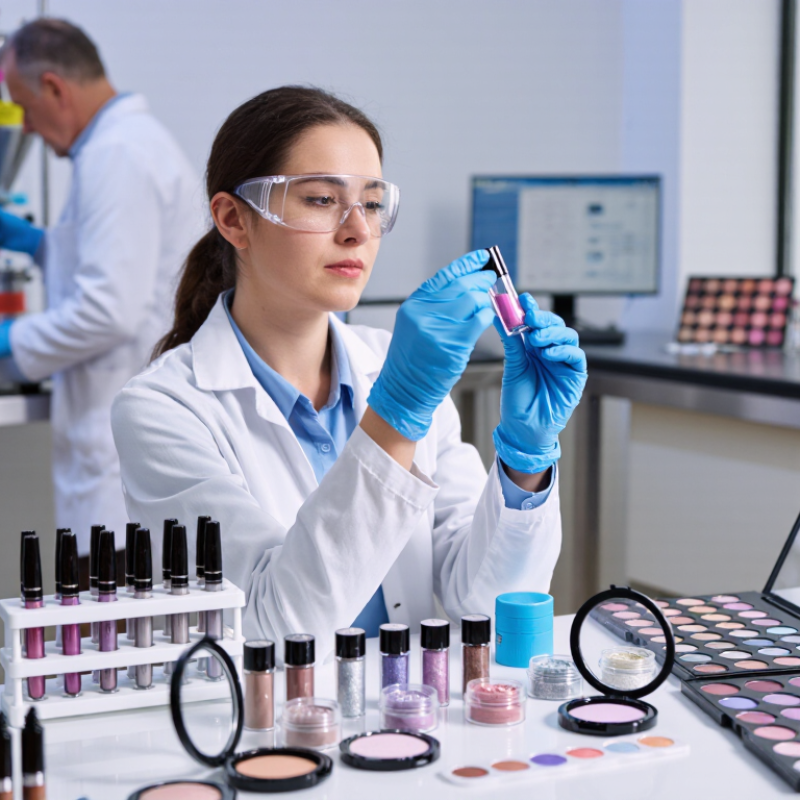
What Are Eye Makeup Contract Manufacturers and What Do They Produce?
Eye makeup contract manufacturers are specialized production partners for cosmetic companies. They develop, test, produce, and package products for another business. Their work can begin with a pigment blend or a liquid formula. It can end with filled tubes, pressed pans, or ready-to-ship cartons.
Typical products include eyeshadow palettes, single shadows, eyeliners, mascaras, brow gels, eye primers, and makeup removers. Manufacturers may also provide shade matching, component sourcing, filling, labeling, and batch documentation. A reliable facility should follow recognized cosmetic manufacturing practices and maintain clean, controlled production areas. It should also perform stability checks, microbial testing where appropriate, and packaging compatibility reviews. That detail matters.
From practical supplier evaluations, the sample stage deserves careful attention. A smooth prototype does not always perform well during large-scale filling. Mascara can dry faster in a new package, while pressed powder may crack after transport. Small errors spread. Ask for production records, quality procedures, test results, and clear approval steps. Verify whether the manufacturer controls pigment consistency across batches. Check how it handles complaints, retained samples, and corrective actions. I have found that communication often reveals more than a polished factory tour. Some suppliers respond quickly but document poorly. Others have strong systems yet explain technical limits unclearly. A thoughtful manufacturer admits these weaknesses and offers measurable improvements. Regulatory requirements also vary by market, so product claims, ingredients, labeling, and safety assessments need qualified review before commercial release.
How to Evaluate Eye Makeup Manufacturers for Quality and Compliance
Choosing the best eye makeup contract manufacturer in 2026 requires more than comparing prices. Evaluate how the facility controls products used near sensitive eyes. Ask for current cosmetic manufacturing certifications, documented quality procedures, and trained personnel records. Inspect cleanrooms, weighing areas, filling lines, and material storage. Powder should not drift between batches. Liquid products need controlled mixing and reliable preservation systems.
Request complete batch records, raw material specifications, supplier approval documents, and stability data. Review microbial testing, heavy metal controls, shade consistency, and packaging compatibility. Eye pencils, mascaras, liners, and pressed powders require different risk assessments. The manufacturer should explain sampling plans without vague promises. Traceability matters. A finished unit should connect to its formula, ingredients, operators, equipment, and release results.
Regulatory knowledge is equally important. Confirm that formulas, claims, labels, and safety files match the markets where products will be sold. Ask how the facility manages complaints, recalls, deviations, and corrective actions. Strong manufacturers show evidence, not polished presentations. A perfect audit packet can still hide weak shop-floor habits. Visit the site if possible. Watch whether employees follow procedures when nobody is prompting them. I would also test communication during a small pilot run, because delays and unclear change control often appear there. Some evaluations may miss packaging failures after transport, so include heat, cold, vibration, and leakage checks before approving full production.
How to Evaluate Eye Makeup Manufacturers for Quality and Compliance
The chart maps major quality standards and cosmetic regulations that may be relevant when assessing an eye makeup contract manufacturer. The year shown is the publication, adoption, or effective year of each framework—not a manufacturer performance score.
During supplier qualification, verify current certificates, documented GMP procedures, batch traceability, microbial and stability testing, ingredient compliance, product information files, adverse-event procedures, and market-specific registration or notification records.
Reference frameworks: ISO 22716:2007, ISO 9001:2015, Regulation (EC) No 1223/2009, China Cosmetic Supervision and Administration Regulation effective 2021, the U.S. Modernization of Cosmetics Regulation Act of 2022, and the UK Cosmetic Products Enforcement Regulations 2013.
Which Manufacturing Capabilities Matter for Eye Makeup Brands in 2026?
The best eye makeup contract manufacturers in 2026 will offer more than attractive sample shades. They need controlled, repeatable production for mascara, eyeliner, eyeshadow, and brow products. A capable facility should operate under recognized cosmetic quality systems, such as ISO 22716 principles, with documented batch records and traceable raw materials. Clean rooms, calibrated filling equipment, and trained operators matter when products are used near sensitive eyes.
Product development capability is equally important. Brands should look for in-house color matching, texture adjustment, stability testing, and packaging compatibility studies. A mascara formula may separate after heat exposure. An eyeliner may dry too quickly on the applicator. These issues need testing before commercial production. Microbial control and preservative performance also require qualified laboratory support, not visual inspection alone. Small details matter.
Flexibility can separate a useful partner from a basic filler. Ask about low-volume trials, shade changes, refill options, and production scaling. Strong manufacturers can manage both compact runs and larger seasonal demand without changing the approved formula casually. They should explain minimum order quantities, lead times, defect limits, and corrective actions clearly. That transparency builds trust.
Price still matters, but it should not lead the evaluation. A cheaper component can create leakage, breakage, or uncomfortable application. Even experienced teams can overlook carton tolerance or brush compatibility. Regular factory audits, retained samples, and clear approval checkpoints reduce that risk, although they cannot remove it completely. Avaliable capacity, technical communication, and honest documentation often reveal more than a polished sales presentation.
How Do Costs, Minimum Orders, and Lead Times Compare?
Choosing the best eye makeup contract manufacturer in 2026 requires more than comparing quoted unit prices. Grand View Research valued the global color cosmetics market at approximately USD 70.9 billion in 2023, with continued growth expected through 2030. That demand increases factory capacity pressure. A private-label eyeshadow palette may start near 1,000–5,000 units, while custom formulations often require higher minimum orders. Indicative costs range from USD 1.20 to USD 4.50 per unit, excluding packaging, testing, freight, and mold fees.
Lead times vary sharply. Stock formulas can ship within four to eight weeks after artwork approval. Custom eye products commonly need twelve to twenty-four weeks, including formulation, stability checks, shade matching, production, and quality release. The Personal Care Products Council reports that safety testing and quality controls remain essential parts of responsible cosmetics manufacturing. However, industry reports rarely publish standardized factory MOQs or lead times. Buyers should treat online figures as starting points, not promises.
Tips: Request a line-by-line quotation. Separate formula, filling, packaging, testing, and freight charges. Ask whether the MOQ applies per shade or the complete order. Confirm batch records, retained samples, allergen documentation, and change-control procedures. A lower quote may hide expensive artwork plates or unused packaging. My own caution: selecting the cheapest supplier can create slower approvals and costly rework. A small pilot order may reveal color inconsistency, weak pressing, or applicator damage before full production. Circana’s beauty tracking also shows how quickly consumer preferences shift, so flexible MOQs can matter more than a slightly lower unit cost.
How to Choose the Best Contract Manufacturer for Your Eye Makeup Line
Choosing a contract manufacturer for an eye makeup line requires more than comparing unit prices.
Start with technical fit. Ask whether the facility develops mascaras, eyeliners, shadows, or multi-use products at your target scale. Review its cosmetic GMP system, laboratory equipment, and staff qualifications. A strong partner should explain pigment dispersion, preservative strategy, wear testing, and removal performance in plain language. Vague answers deserve attention.
Request recent batch records, stability data, microbiological results, and packaging compatibility reports.
For liquid liner, inspect drying time, brush control, and leakage after transport simulation. For mascara, check clumping, flaking, odor, and wiper performance. Shade approval should use physical samples, not digital images alone. Small differences become obvious around the eyes. Confirm how the manufacturer controls color drift between batches and handles rejected materials.
Evaluate communication during sampling.
Do responses include measurements, risks, and revised timelines? Reliable manufacturers welcome a controlled factory audit and provide clear documentation for ingredients, allergens, claims, and traceability. Verify testing plans against each selling market, because requirements differ. Do not accept “global compliance” as proof. Ask for named standards and current certificates. A low minimum order can help a new line, yet it may hide higher testing costs or limited process control. That trade-off is easy to miss. Build a pilot batch with defined acceptance limits, then challenge it with heat, cold, vibration, and repeated opening. Leave room for correction. Your first formula may not be the best one.
FAQS
Request current cosmetic certifications, quality procedures, and training records. Inspect cleanrooms, weighing areas, filling lines, and storage rooms. Clean habits matter.
Eye products are used near sensitive areas and need careful contamination control. Powder should not drift between batches. Filling equipment should be calibrated and properly maintained.
Ask for batch records, raw material specifications, supplier approvals, and stability data. Review microbial results, heavy metal controls, and shade consistency records. Missing documents deserve questions.
Look for color matching, texture adjustment, stability testing, and packaging compatibility studies. For example, mascara may separate after heat exposure. An eyeliner may dry on its applicator.
Mascaras, eyeliners, pencils, pressed powders, and brow products need different risk assessments. Review preservation performance, leakage resistance, and application consistency. Visual checks are not enough.
Each finished unit should connect to its formula, ingredients, operators, equipment, and release results. This helps teams investigate defects quickly. Traceability can still fail if records are incomplete.
Watch whether employees follow procedures without constant supervision. Inspect material labels, cleaning routines, and production flow. A polished audit file may hide weak daily habits.
Test packaging after heat, cold, vibration, and leakage exposure. Check brush compatibility, carton tolerance, and container sealing. Transport problems are easy to overlook.
Test communication, lead times, change control, defect handling, and small-batch consistency. A pilot can reveal delays that presentations conceal. I would not trust samples alone.
Price matters, but a cheaper component may cause leakage, breakage, or uncomfortable application. Compare minimum quantities, capacity, defect limits, and corrective actions. The lowest quote is not always the safest choice.
Conclusion
Choosing the right eye makeup contract manufacturer is a critical step for building a successful cosmetics line in 2026. Eye Makeup Contract Manufacturing covers the development and production of products such as eyeshadows, eyeliners, mascaras, brow products, and related formulas. The best manufacturers should demonstrate strong quality control, reliable ingredient sourcing, safety testing, compliant documentation, and consistent batch performance.
Brands should also evaluate capabilities that support modern product development, including custom formulation, color matching, clean or vegan options where appropriate, flexible packaging, efficient filling, and scalable production. Comparing minimum order quantities, unit costs, sampling fees, development timelines, and lead times can help determine whether a supplier fits the business model. Ultimately, the ideal partner combines technical expertise, transparent communication, dependable capacity, and regulatory awareness. A careful assessment of product quality, customization options, pricing, production flexibility, and long-term support will help brands choose a manufacturer capable of bringing their eye makeup concepts to market efficiently and consistently.

Blog Tags: