Creating an exceptional matte lipstick requires balancing opposing physical properties: opacity versus feel, hardness versus glide, and matte appearance versus mucosal hydration. In traditional color cosmetic formulation, increasing matte texture often means adding high percentages of dry particulate fillers such as silica, kaolin, or calcium carbonate. However, excessive solid powder loading creates a brittle formula that breaks under mechanical stress during manufacturing or application.
1. Micro-Dispersion & Rheological Stability
The foundation of premium matte lipstick manufacturing lies in pigment wet-out and dispersion. Raw iron oxides, titanium dioxide, D&C red lakes, and organic dyes naturally exist as agglomerated clusters. If poured directly into a hot wax phase, these agglomerates cause streaking, gritty application, and inconsistent shade payoff.
At Classic Cosmetics, our process utilizes high-energy, three-roll ceramic mills. Pigments are premixed in ester oils and ground down to sub-micron particle sizes. This microscopic reduction ensures every pigment particle is fully coated by liquid esters prior to wax integration. The outcome is an intense color payoff upon minimal pressure and a homogeneous matte surface that reflects light uniformly.
2. Thermal Phase Optimization & Wax Matrix Engineering
Solid bullet lipsticks rely on a crystalline wax scaffold to maintain structural integrity at high storage temperatures (up to 45°C / 113°F) while melting instantly upon contact with human skin body temperature (~32°C). Achieving this requires blending high-melting-point waxes (such as Carnauba at 82°C and Candelilla at 69°C) with flexible synthetic or ozokerite waxes.
In matte formulas, the wax matrix must also absorb liquid oils rapidly upon cooling to prevent "sweating"—a phenomenon where liquid oils bleed out of the bullet matrix onto the product surface during thermal fluctuations. Through differential scanning calorimetry (DSC) testing, our formulation chemists optimize crystal nucleation rates, producing structurally sound lipsticks that remain stable across worldwide logistics channels.
Key Technical Metrics Monitored in Our California Facility:
- Drop point / Melting point: Calibrated between 65°C – 75°C for bullet stability.
- Breakage force (Penetrometry): Tested to withstand >3.5 N of lateral shear force.
- Viscosity dry-down curve: Controlled evaporation dynamics for liquid matte formulas.
- Accelerated aging stability: 3-month stability protocol at 40°C / 75% RH, freeze-thaw cycles (-10°C to +45°C), and 48-hour photostability chamber exposure.
3. Clean Beauty Compliance & RSPO Sustainable Palm Sourcing
As global regulations evolve under FDA MoCRA in the United States and EU Cosmetics Regulation (EC) No 1223/2009 in Europe, supply chain compliance is non-negotiable. Modern global buyers must verify that raw materials are ethically sourced and free from restricted contaminants.
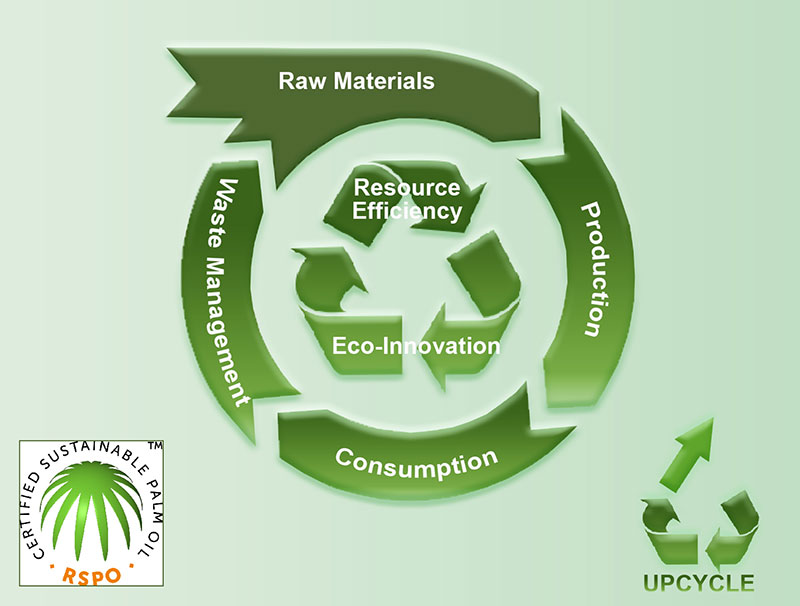
Classic Cosmetics is an audited and certified Supply Chain Partner of the Roundtable on Sustainable Palm Oil (RSPO). Many functional ingredients in lipsticks—such as caprylic/capric triglycerides, isopropyl palmitate, and emulsifying esters—derive from palm oil derivatives. By ensuring RSPO-certified supply chain traceability, we help your brand deliver zero-deforestation, ethically responsible cosmetics to conscious consumers worldwide.