
1. The Modern B2B Landscape of Color Cosmetics Contract Manufacturing
The global color cosmetics sector is undergoing a structural transition. Sourcing directors, procurement executives, and indie beauty innovators no longer evaluate a contract manufacturer solely on unit cost. In an ecosystem governed by Google's Semantic Search expectations, stringent global safety regulations, and rapid consumer micro-trends, success requires deep industrial expertise, absolute transparency, and measurable formulation performance.
Legacy color cosmetics contract manufacturing model was often hampered by slow speed-to-market, unstable pigment dispersions, opaque ingredient origins, and structural batch-to-batch shade variances. Today’s market demands a turnkey OEM/ODM partner capable of operating at the intersection of high-precision chemistry, automated engineering, and environmental stewardship. Classic Cosmetics Inc., operating from our state-of-the-art facility in Chatsworth, California since 1988, has engineered an agile manufacturing framework designed to address these critical pain points.
Technical Information Gain: What Defines Superior Manufacturing?
Unlike standardized white-label packagers, true color cosmetics contract manufacturing relies on triple-roll pigment micronization, specialized oil-to-wax rheology tuning, and automated slurry-pressing techniques. This ensures high pay-off color payout, zero pigment agglomeration, and long-term thermodynamic stability under accelerated thermal stress testing.
By controlling every phase of development—from raw material qualification to custom press die machining, bulking, automated filling, and secondary assembly—we empower global brands to scale rapidly while safeguarding product integrity and regulatory compliance under US MoCRA (Modernization of Cosmetics Regulation Act) and EU Cosmetic Regulation (EC) No 1223/2009.
2. Specialized Product Capabilities & Formulations
Classic Cosmetics Inc. offers specialized ODM custom development and high-volume OEM contract manufacturing across all color cosmetic categories. Our R&D chemists utilize proprietary dispersion techniques and skin-loving active complexes to formulate award-winning beauty products.
Lip Architecture
High-pigment creamy, satin, and matte lipsticks, transfer-proof liquid lip colors, sheer lip oils, and nourishing balm sticks. Formulated with precise melt-point control, non-feathering polymer networks, and luxurious payoff.
Eye & Brow Innovation
Slurry-pressed and dry-pressed eyeshadows, high-chroma loose and pressed pigments, waterproof gel liners, precision micro-brow pencils, and lengthening mascaras tested for ophthalmological safety.
Complexion & Face
Hybrid skincare-infused liquid foundations, light-diffusing concealers, micronized silk blushes, bronzers, highlighters, and multi-use face sticks offering buildable coverage with seamless blendability.
Custom Tooling & Molds
In-house machine tooling for proprietary press dies, custom powder embossing, localized logo debossing, and unique bullet profiles that establish distinct visual brand identity.
Technical Formulation Breakdown
| Product Category | Formulation Architecture | Key Rheology Modifiers | Performance Attributes |
|---|---|---|---|
| Matte Lipsticks | Anhydrous Wax-Oil-Silicone Matrix | Isododecane, Synthetic Wax, Silica Dimethyl Silylate | Zero-transfer, 12-hr wear, velvety touch, feather-resistant |
| Slurry Pressed Eyeshadows | Liquid-to-Powder Volatile Solvent Slurry | Isoparaffin, Magnesium Myristate, Dimethicone | Zero fallout, butter-soft feel, hyper-intense chroma, no glazing |
| Skincare Serum Foundation | Water-in-Silicone (W/Si) Emulsion | PEG-10 Dimethicone, Disteardimonium Hectorite | Breathable coverage, non-comedogenic, barrier hydration, ΔE color match |
| Clean Baked Bronzers | Talc-Free Mineral & Rice Starch Complex | Lauroyl Lysine, Zinc Stearate, Caprylic/Capric Triglyceride | Airbrushed finish, seamless blend, natural glow without synthetic sheen |
3. Future Sourcing & Procurement Trends in Color Cosmetics (2026–2030)
The global cosmetics procurement landscape is evolving under pressure from environmental mandates, digital supply chains, and demanding consumer demographics. Sourcing executives evaluating contract manufacturing partners must anticipate these critical structural shifts:
1. AI-Driven Color Matching & Spectrophotometric Quality Assurance
Manual, visual color matching is being superseded by automated spectrophotometry. In high-volume contract manufacturing, maintaining a color variance tolerance of ΔE < 0.5 across multi-site production lots is vital. Classic Cosmetics utilizes digital colorimeters and automated batch correction algorithms to ensure absolute shade reproducibility between R&D samples and 500,000-unit factory runs.
2. The Clean Tech & Synthetic Bio-Ingress Revolution
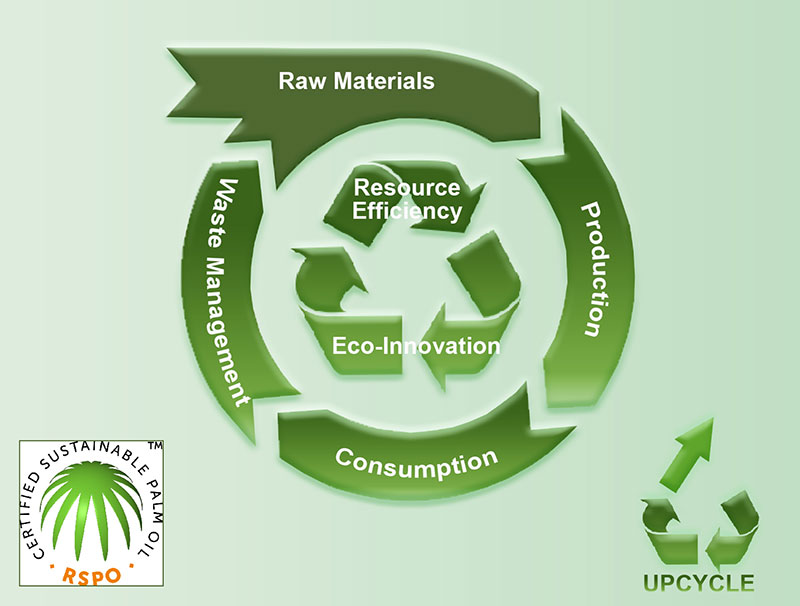
Consumer demand for "Clean Beauty" has shifted from marketing terminology to rigorous chemical exclusion lists. Procurement directors are actively stripping PFAS, cyclic silicones (D4/D5), talc, parabens, and microplastics from their supply chains. Next-generation contract manufacturing relies on upcycled botanical binders, bio-fermented squalane, and coated synthetic micas to match traditional silicone performance without environmental persistence.
3. Waterless (Anhydrous) Formulation & Freight Carbon Reduction
Water represents up to 80% of traditional liquid foundation formulations, imposing heavy freight and carbon costs. Sourcing strategies are prioritizing hyper-concentrated anhydrous powders, solid sticks, and micro-encapsulated dry powders that activate upon skin contact. This reduces transit volume while enhancing shelf-life stability without aggressive preservative loads.
4. Fully Traceable & Ethical Supply Chains
Global regulations now require complete auditing of mica sourcing (child-labor-free certification) and palm oil derivatives. As a certified RSPO (Roundtable on Sustainable Palm Oil) Supply Chain Partner, Classic Cosmetics guarantees complete supply chain transparency, providing corporate buyers with verifiable documentation for ESG and SEC compliance.
4. R&D Formulation & Manufacturing Technology Development Trends
Chemical formulation in color cosmetics is shifting toward multifunctional hybrid products—the "skinification of makeup." Modern consumers expect color cosmetics to act as secondary skincare treatments, demanding sophisticated delivery systems and active ingredient stabilization.
- Active Micro-Encapsulation: Integrating fragile skincare actives (Vitamin C, Hyaluronic Acid, Niacinamide, Retinol alternatives) into color matrices without triggering phase separation or degradation during heated bulk processing.
- Talc-Free High-Performance Pressing: Replacing talc with surface-treated tapioca starches, synthetic fluorphlogopite, and boron nitride requires customized binder systems and hydraulic press adjustments to maintain impact strength without crumbling.
- Refillable & Circular Mechanical Packaging: Engineering lipstick bullets and pressed powder pans with standard dimensional tolerances to ensure smooth fit inside luxury, reusable secondary packaging containers.
- Advanced Photostability & Blue Light Defense: Incorporating non-nano Zinc Oxide and iron oxide blends to protect both the skin and the product formula against UV/HEV degradation.
By combining physical chemistry with mechanical engineering, Classic Cosmetics maintains custom-built press dies, proprietary tooling, and automated filling lines capable of handling variable viscosities and thermal sensitivities.
5. High-Intent Procurement FAQ: Technical Answers for Cosmetic Buyers
Below are technical responses to the most critical questions asked by procurement directors, brand developers, and global supply officers when evaluating contract manufacturing partners for color cosmetics.
How do we transition from laboratory micro-batch R&D to automated 100,000+ unit production runs without color shift or texture variation?
Scaling a formula from a 1kg laboratory beaker to a 1,000kg production vessel requires precise heat transfer calculations, controlled shear mixing rates, and standardized cooling cycles. At Classic Cosmetics, our R&D team works directly alongside process engineers. We validate pilot batches (50kg-100kg) using production-scale homogenizers and three-roll mills. Spectrophotometric shade analysis (ΔE tracking) is conducted at top, middle, and bottom tank samples during bulk discharge to eliminate phase layering and color drift before filling.
What are the regulatory MoCRA and ISO 22716 cGMP compliance requirements for US-manufactured color cosmetics targeting global distribution?
Under the US Modernization of Cosmetics Regulation Act (MoCRA), facility registration, product listing, safety substantiation, and adverse event reporting are legally mandatory. ISO 22716 cGMP certification guarantees that every manufacturing step—raw material quarantine, microbiological challenge testing (USP <51>), equipment sanitation validation, and batch record retention—conforms to international standards accepted by the FDA, EU Health Authorities, and Health Canada. Classic Cosmetics maintains complete batch traceability records and provides comprehensive Safety Data Sheets (SDS) and Certificates of Analysis (CoA) for seamless cross-border customs clearance.
How does Classic Cosmetics optimize binder ratios in talc-free pressed powders to prevent glazing while maintaining drop-test durability?
Talc-free formulations utilizing mica, corn starch, or silica exhibit different oil-absorption capacities and particle compressibility compared to traditional talc. We engineer customized liquid binder systems—utilizing esters like Isostearyl Neopentanoate paired with zinc or magnesium stearates—calibrated precisely to the specific particle surface treatment. Through controlled hydraulic slurry and dry pressing techniques, we achieve the exact target bulk density, ensuring smooth, non-glazing payoff upon brush stroke while passing rigorous 30-inch drop tests.
What are typical production lead times, Minimum Order Quantities (MOQs), and stage-gate timelines for custom turnkey vs. contract filling projects?
For standard contract filling (where the brand provides packaging), typical lead times are 6 to 8 weeks following receipt of qualified components and raw materials. For full turnkey projects—encompassing formula development, custom packaging procurement, compatibility testing, stability testing (12-week accelerated program), and secondary kit assembly—timelines range from 16 to 24 weeks. Standard MOQs start at 5,000 to 10,000 units per shade for color cosmetics, with scalable infrastructure designed to support high-volume runs exceeding 1,000,000 units per month.
How do custom press dies and proprietary molding enhance anti-counterfeiting and visual brand identity?
Off-the-shelf aluminum pans are easy targets for counterfeit markets. In-house machining of custom press dies enables intricate 3D logo embossing, geometric surface texturing, and multi-tone powder sectioning directly into the pressed formula pan. These custom tooling dies not only serve as a distinct visual hallmark for luxury retail brands but also create significant technical barriers against unauthorized gray-market replication.
What sustainability credentials apply to cruelty-free and RSPO-certified palm oil derivative sourcing in color cosmetics manufacturing?
Color cosmetics rely heavily on palm oil-derived emulsifiers, waxes, and esters (e.g., Cetyl Alcohol, Caprylic/Capric Triglyceride). As a certified RSPO Supply Chain Partner, Classic Cosmetics sources palm-derived ingredients through audited, sustainable supply channels, ensuring zero deforestation. Furthermore, our 100% cruelty-free commitment guarantees that no raw material or finished formulation is ever subjected to animal testing, directly supporting Leaping Bunny and PETA brand certification standards.
6. Enterprise Advantage: Why Leading Brands Partner with Classic Cosmetics Inc.
Selecting the right contract manufacturer is one of the most critical strategic decisions a beauty brand makes. Classic Cosmetics Inc. combines the flexibility and personalized service of a family-owned enterprise with the rigorous operational standards of a global contract manufacturer.
The Classic Cosmetics Benchmark
Since 1988, our Chatsworth, California facility has served as the innovation engine behind premier prestige beauty brands, mass-market retail lines, and direct-to-consumer influencer launches.
35+ Years Heritage
Over three decades of specialized experience in complex color cosmetic formulations and high-precision liquid/powder processing.
In-House Tooling
On-site machine shop capabilities for custom press dies, embossed pan designs, and fast-turn prototype molding.
ISO 22716 & cGMP
Audited and certified by Pfeiffer Consulting for strict adherence to international cosmetic cGMP safety standards.
Full Turnkey Integration
Complete product lifecycle execution: raw material sourcing, R&D, bulk manufacturing, filling, assembly, and secondary packaging.