
Custom Press Dies and Molds in Cosmetic Manufacturing: The Ultimate Technical & Strategic Procurement Guide for B2B Buyers
An authoritative analysis of powder compaction tooling, micro-embossing technology, multi-cavity die engineering, and sustainable contract manufacturing scaling for global beauty brands.
Mastering Precision Powder Compaction through Advanced Tooling Engineering
In high-end color cosmetics manufacturing, the structural integrity, pay-off efficiency, visual aesthetics, and mechanical resilience of pressed powder products—such as eyeshadows, compact blushes, highlighters, and bronzers—are dictated by the precision of Custom Press Dies and Molds. For international procurement directors and beauty brand directors, tooling is not merely a piece of metal hardware; it is the fundamental bridge between bulk formulation chemistry and flawless consumer experience.
When pressing delicate powders containing complex mica flakes, synthetic fluorophlogopite, treated pigments, or high binder loads, standard off-the-shelf dies fail to account for bulk density variations, air evacuation requirements, and pressure distribution curves. Custom-engineered press dies mitigate critical manufacturing anomalies such as delamination, surface glazing, drop-test fracture, and shade variation across multi-cavity press runs.
At Classic Cosmetics Inc., established in Chatsworth, California in 1988, our in-house engineering and tooling specialists bring over three decades of empirical metallurgy and powder mechanics expertise. By aligning custom die geometry with specific press dynamics (hydraulic, pneumatic, or mechanical servo-driven), we guarantee optimal bulk volume compression ratios and microscopic edge sharpness for luxury cosmetic formulations.
Technical Classification & Product Recommendations for Custom Press Dies and Molds
Global beauty brands requiring mass-scale, high-consistency production must select tooling solutions tailored to their specific formulation textures and pan geometry. Below is an engineering breakdown of primary custom die and mold configurations recommended for specialized beauty manufacturing applications:
1. Single & Multi-Cavity Standard Dies
Designed for high-throughput single-shade powders. Manufactured from high-grade hardened tool steel or anodized aluminum alloys, these dies feature micro-polished punch surfaces to prevent powder adhesion and ensure swift ejection cycles on automated pressing lines.
2. Multi-Color Sectional Press Dies
Utilized for complex multi-shade compacts (e.g., mosaic blushes, split-pan eyeshadows). Engineered with ultra-narrow tolerances (±0.005mm) divider walls to prevent shade bleed, cross-contamination, and structural shear during simultaneous pressing phases.
3. 3D Micro-Embossed Surface Molds
Created for high-end luxury brand positioning. These molds integrate laser-etched top punches capable of imprinting intricate brand logos, wave textures, or floral patterns directly onto the powder cake without sacrificing cake structural integrity.
| Tooling Category | Material Specification | Recommended Pressure Range | Primary Benefit | Target Product Line |
|---|---|---|---|---|
| Tungsten Carbide Reinforced Dies | High-density carbide inserts | 1,200 – 2,500 PSI | Extreme wear resistance & zero flex | High-speed continuous press runs |
| Anodized Aircraft Aluminum Dies | 7075-T6 Hard-coated Aluminum | 600 – 1,200 PSI | Lightweight, fast heat dissipation | Limited edition & short-run collections |
| Vacuum-Deaerated Punch Molds | Micro-porous stainless steel alloy | 800 – 1,800 PSI | Eliminates trapped air pockets | Micronized ultra-fine translucent powders |
| Modular Insert Die Sets | D2 Hardened Tool Steel | 800 – 2,000 PSI | Rapid pan shape interchangeability | DTC fast-beauty product launches |
Why Global Brands Partner with Classic Cosmetics Inc. for Custom Press Tooling
Sourcing Custom Press Dies and Molds is not just a hardware transaction; it requires end-to-end synergy between toolmakers, formulation chemists, and production technicians. Classic Cosmetics Inc. offers distinct strategic advantages that safeguard brand equity and production efficiency:
35+ Years of Family-Owned California Heritage (Since 1988)
Operating from our modern Chatsworth, California facility, we combine American manufacturing precision with personalized family-owned oversight, maintaining absolute control over tooling design, sample validation, and contract packaging.
ISO 22716 & cGMP Certified Standards
Our facility operates under rigorous European ISO 22716 and FDA cGMP standards. Every custom die set is subjected to strict dimensional audits and metallurgical verification to eliminate toxic heavy-metal contamination risks.
Full Turnkey Integration from Concept to Packaging
Because we formulate, press, and package in-house, our tool designs are pre-validated against our automated filling lines. This eliminates misalignments between tin pan specs, compact clear wells, and press punches.
Future Procurement & Technological Trends in Custom Press Dies (2025–2030)
As global market demands shift toward clean beauty formulations, micro-batch agility, and eco-friendly packaging, the engineering of press dies and molds is undergoing significant technological evolutions. B2B procurement leaders must anticipate these developments to maintain competitive advantage:
1. Clean-Beauty Binder Compatibility & Anti-Sticking Coatings
Modern clean beauty standards heavily restrict silicone binders (such as dimethicone) in favor of natural plant oils, esters, and upcycled squalane. These natural alternatives alter bulk tackiness, making powders prone to sticking to traditional steel die punches. Future custom molds are utilizing Advanced Diamond-Like Carbon (DLC) and Fluoropolymer nano-coatings that reduce surface friction, permitting clean punch release without oil-film buildup.
2. Zero-Plastic Sustainable Packaging Alignment
Global regulations are driving a shift away from traditional metal pans glued into plastic compacts toward recyclable aluminum pans, refillable magnetic pallets, or direct-pressed paperboard compacts. Custom press dies are increasingly required to accommodate non-standard pan walls, rolled-edge aluminum tins, and paper-well structures that demand precise peripheral pressure distribution to prevent side-wall blowouts.
3. Modular Insert Systems for Agile Supply Chains
To reduce capital expenditure and speed up time-to-market for DTC and influencer brands, modern tooling design is shifting toward universal master die bases with interchangeable custom inserts. Procurement teams can launch seasonal embossed patterns or new shade geometry by swapping low-cost die inserts rather than commissioning full heavy-duty tooling assemblies.
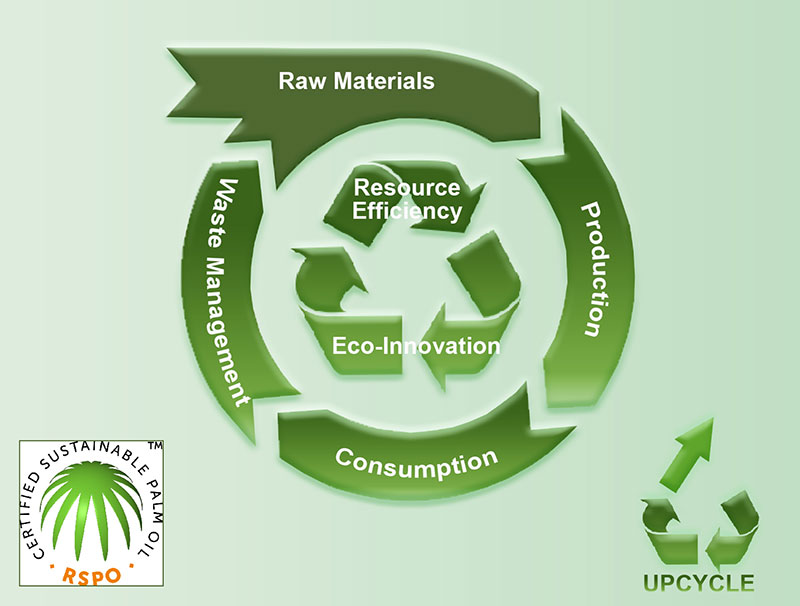
RSPO & ESG Alignment in Production
Classic Cosmetics is a certified Supply Chain Partner of the Roundtable on Sustainable Palm Oil (RSPO). Our custom tooling procedures and formulation processes adhere to environmentally responsible manufacturing standards, supporting your brand's ESG targets from raw material sourcing to energy-efficient tooling operation.
Frequently Asked Questions (FAQ) for Global Tooling & OEM Procurement
Below are detailed technical answers to the most frequent inquiries raised by beauty brand supply chain officers, product developers, and procurement managers regarding Custom Press Dies and Molds:
What metal alloys are optimal for long-run custom press dies in cosmetic pressed powders?
For high-volume continuous manufacturing runs exceeding 500,000 units, D2 or H13 hardened tool steel hardened to 58-62 HRC (Rockwell Hardness) is recommended due to its exceptional resistance to abrasive mica powders. For shorter production runs or fast-turnaround prototypes, Aircraft-grade 7075-T6 anodized aluminum is highly cost-effective and provides fast machining lead times with excellent dimensional stability.
How does custom mold design prevent powder cracking, glazing, or drop-test failure?
Powder cracking and drop-test failures occur when air is trapped within the powder mass during rapid compression or when the compression ratio is unevenly distributed across the pan area. Custom dies solve this by incorporating micro-tapered relief angles, controlled air-venting channels, and custom vacuum evacuation ports. Furthermore, custom upper punch curvature is engineered to match the formulation's elasticity, ensuring uniform compaction density from center to rim.
What is the typical lead time and tooling lifespan for custom cosmetic press molds?
Initial engineering CAD design, 3D prototyping, and CNC precision machining typically require 3 to 5 weeks, depending on pattern complexity (such as multi-level 3D embossing or multi-cavity sectional walls). Once fabricated and heat-treated, high-grade tool steel press dies have an operational lifespan exceeding 1,000,000 compression cycles under standard operating pressures when properly maintained under cGMP storage protocols.
How do multi-color press dies maintain clean line separation without shade bleed?
Multi-color dies utilize precision-machined internal divider walls (often engineered with tungsten carbide or hardened steel edges) that physically isolate adjacent shade cavities during the primary dosing and initial tamping phases. Controlled pneumatic multi-stage pressing ensures that individual powder doses settle uniformly before final high-tonnage consolidation, resulting in razor-sharp color boundaries without color migration.
Can custom dies created by Classic Cosmetics be adapted to existing high-speed pressing equipment?
Yes. Our engineering team designs custom dies and punch plates to fit seamlessly into all standard industry press machinery, including hydraulic, pneumatic, and automated rotary pressing systems (such as VEGA, Vetraco, or custom servo presses). We supply universal mounting adapter plates and standardized guide pillar assemblies to ensure rapid setup and zero downtime on your production floor.
What quality control certifications should procurement teams demand when sourcing cosmetic molds?
Procurement teams should verify that the manufacturer operates under ISO 22716 (Cosmetics cGMP) certification, maintains ISO 9001 quality management standards, and provides full Material Test Reports (MTR) confirming that die metals are food/cosmetic contact safe, corrosion-resistant, and free from heavy metals or toxic plating leachates.
Trusted Certifications & Industry Partnerships
Our credentials reflect our unwavering commitment to quality, sustainability, and global compliance.
 RSPO Partner
 ISO 22716 cGMP
 Made in California