
Cosmetics & Skincare Insights

Industry news, formulation innovations, and contract manufacturing guides.

Formulation & Color Trends

Custom lipstick, skincare, and color cosmetic formulation trends.

Technology & Innovation

State-of-the-art automation and cGMP production standards.

Custom Molds & Tooling

Proprietary packaging and tooling solutions for beauty brands.

Turnkey Beauty Solutions

Full-service manufacturing from concept to retail packaging.

0%

China has become a major manufacturing base for precision tooling, but choosing the best supplier requires more than comparing quotations. Custom Press Dies and Molds support automotive panels, electrical terminals, appliances, and increasingly complex lightweight components. Supplier capability must match the material, tolerance, production volume, and expected tool life.

Industry data supports this growing demand. Grand View Research’s Metal Stamping Market Size, Share & Trends Analysis Report identifies automotive, electronics, and industrial equipment as major application sectors. It also projects continued market expansion through 2030. MarketsandMarkets reports similar momentum, driven by automation, electric vehicles, and tighter requirements for dimensional accuracy. These trends make mold design, simulation, heat treatment, and inspection systems decisive factors.

A reliable Chinese supplier should demonstrate practical experience with progressive dies, deep-drawing tools, compound dies, and high-strength steel applications. Look for documented sampling results, CMM inspection records, tryout procedures, and clear correction plans. A modern press line matters, but engineering discipline matters more. Ask how the supplier controls springback, burr height, surface marks, and material variation.

The lowest price can hide future costs. Poor alignment may create uneven wear, while weak maintenance support can delay production. This is where many sourcing decisions become overly optimistic. No supplier fits every project. A careful evaluation should compare design expertise, steel selection, machining accuracy, delivery control, after-sales support, and verified customer experience. The best partner is not simply the cheapest factory. It is the supplier that can repeatedly convert drawings into stable, measurable production results.
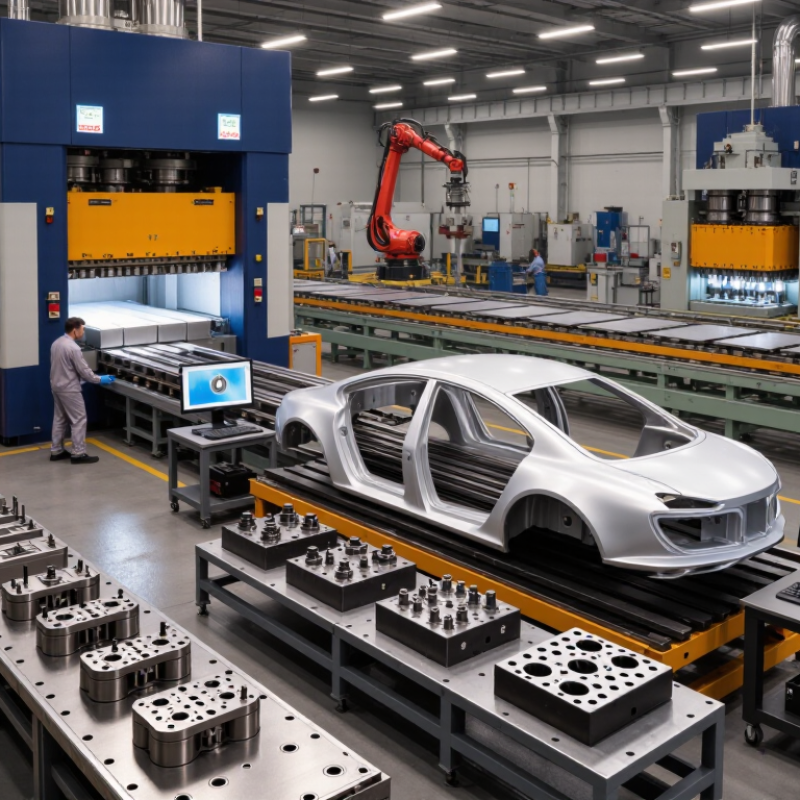
China Best Custom Press Dies and Molds Supplier?

What Are Custom Press Dies and Molds?

What Are Custom Press Dies and Molds?

Custom press dies and molds are engineered tools that shape materials into precise parts. A press die usually cuts, bends, draws, or forms sheet metal under controlled force. A mold creates parts by filling a shaped cavity with plastic, rubber, or another suitable material. Their designs depend on the part geometry, material behavior, production volume, and required tolerance.

A reliable project begins with a clear drawing and practical manufacturing review. Engineers check bend radii, wall thickness, draft angles, and potential deformation. They also select tool steel, heat treatment, guide systems, and surface finishes for the working conditions. Small details matter. A poorly placed ejector can leave marks. An incorrect clearance may cause burrs, cracks, or premature wear.

In real production, the first design is not always perfect. Material thickness can vary slightly. A sharp corner may look efficient but perform poorly during forming. Prototype trials, dimensional reports, and sample inspections help reveal these weaknesses before larger production runs. Experienced suppliers should explain these findings openly, rather than hiding them behind attractive drawings. They should also provide maintenance guidance, spare-part recommendations, and realistic delivery information. Clear communication is essential when adjusting a die or mold for stable output. A custom tool is not simply a metal block or cavity; it is a carefully tested production system.

How to Evaluate Chinese Press Die and Mold Suppliers

China Best Custom Press Dies and Molds Supplier?

How to Evaluate Chinese Press Die and Mold Suppliers

Choosing a Chinese press die and mold supplier requires more than comparing quotations. Study their engineering process, tooling experience, and quality records. Ask for sample drawings, inspection reports, and details about material selection. A reliable supplier should explain steel grades, heat treatment, surface finishing, and expected tool life clearly.

Visit the facility when possible. Watch how engineers review tolerances before machining begins. Check the condition of CNC machines, wire-cut equipment, grinders, and measuring tools. A coordinate measuring machine can verify critical dimensions, but only when operators use it correctly. Request a trial report with measurements, press tonnage, cycle results, and correction notes. Small details matter. A clean inspection area helps.

Communication deserves equal attention. Send a detailed drawing and ask the supplier to identify risks, not merely accept every requirement. Their response may reveal practical experience. Ask how they manage design changes, spare parts, packaging, and delivery delays. Verify references from comparable projects, while respecting confidentiality. A supplier’s certificate alone proves little without traceable records and consistent production controls.

My first supplier checklist was too short. It focused heavily on price and delivery. That was a mistake. A cheaper die may require repeated adjustments, causing hidden downtime. I would also review contract terms, intellectual property protection, applicable safety requirements, and dispute procedures before placing an order. Experienced suppliers still make errors, so transparent correction processes matter. Expect questions, not promises.

How to Evaluate Chinese Press Die and Mold Suppliers

Use a structured evaluation model covering engineering, quality, materials, delivery, and tool performance. The weighting below is a practical reference for supplier qualification and is not company or brand performance data.

Dimensional accuracy and tool life receive the highest weighting because they directly affect part consistency, maintenance frequency, and total production cost.

Which Manufacturing Services and Materials Are Available?

Choosing the right custom press dies and molds supplier requires more than comparing prices. Experienced suppliers should offer design review, 3D modeling, prototyping, machining, heat treatment, assembly, and trial production. They can also support progressive dies, stamping dies, deep-drawing tools, and plastic injection molds.

Common materials include tool steel, alloy steel, stainless steel, aluminum, copper, and engineering plastics. Material selection depends on load, wear, corrosion, temperature, and expected production volume. Precision grinding, wire cutting, CNC milling, and surface treatments can improve tool life. Reliable suppliers should provide dimensional inspection, hardness testing, trial reports, and traceable quality records. A first trial may reveal small problems. That is normal, but repeated corrections suggest weak process control.

Tips: Share accurate drawings, tolerances, material grades, and annual volume before quotation. Ask for maintenance guidance and spare-part plans. Check how the supplier handles design changes. Do not select a tool only because it looks inexpensive. A cheaper mold may require more polishing, downtime, or repairs. Even experienced engineers can miss forming stress or material springback, so practical testing remains necessary.

How Are Quality, Tooling, and Production Standards Verified?

China Best Custom Press Dies and Molds Supplier?

How Are Quality, Tooling, and Production Standards Verified?

Choosing a custom press dies and molds supplier requires evidence, not polished promises. Verification starts with an on-site audit or a live production review. Inspectors should examine machining centers, heat-treatment controls, measuring equipment, and maintenance records. Ask for material certificates that match each tool’s traceability code. Certificates alone are not enough.

Tooling quality appears in details: stable die alignment, consistent clearances, polished forming surfaces, and repeatable trial results. A supplier should provide dimensional reports from calibrated CMM equipment. Trial parts need measurement against approved drawings, not visual approval alone. Watch the first-run process. Operators should record setup values, defects, and corrections. A small mismatch can become expensive later.

Production standards also depend on disciplined documentation. Review incoming inspection, in-process checks, final sampling, packaging, and change-control procedures. Request sample inspection reports and nonconformance records, with sensitive commercial information removed. A capable supplier can explain root-cause analysis without blaming the operator. That matters. A perfect sample can hide weak process control, while an honest corrective-action record may show stronger reliability. Reference checks should confirm delivery consistency, communication, and after-sales support. Even experienced buyers can overlook measurement-system variation, so gauge calibration and repeatability deserve direct attention.

How Do You Select the Best Supplier for Your Project?

China Best Custom Press Dies and Molds Supplier?

How Do You Select the Best Supplier for Your Project?

Selecting a custom press die and mold supplier requires more than comparing quotations. Review their experience with similar materials, part sizes, tolerances, and production volumes. Ask for sample drawings, inspection reports, and clear process records. A reliable supplier should explain steel selection, heat treatment, surface finishing, and expected tool life. They should also identify possible forming risks before production begins.

Visit the facility when possible. Observe machining areas, inspection equipment, storage conditions, and worker practices. Check whether critical dimensions are measured with calibrated instruments. Request material certificates and traceability records for major components. Communication matters too. Your supplier should answer technical questions directly and report problems before deadlines become urgent.

A practical lesson is easy to miss. The lowest quote may exclude testing, spare parts, or design changes. I once focused too heavily on unit cost and underestimated revision expenses. That decision looked efficient at first. It was not. Ask for a detailed quotation with tooling scope, acceptance standards, delivery stages, maintenance support, and warranty terms. Confirm who owns the engineering data and how revisions are controlled. A short pilot run can reveal burrs, uneven pressure, poor ejection, or unstable dimensions. Do not rely on polished presentations alone. Evidence is stronger.

FAQS

What should you compare when evaluating a Chinese press die or mold supplier?

Compare engineering experience, similar projects, material knowledge, quality records, communication, and total tooling costs. Price alone misleads.

Which technical documents should a supplier provide?

Request sample drawings, inspection reports, material certificates, heat-treatment details, and traceability records for critical components.

How can you assess the supplier’s production equipment?

Visit the facility when possible. Check CNC machines, wire-cut equipment, grinders, measuring tools, and storage conditions.

Why is inspection equipment important?

Calibrated instruments verify critical dimensions. A coordinate measuring machine helps, but trained operators still matter.

What should a tooling trial report include?

Ask for measurements, press tonnage, cycle results, defects, correction notes, and final acceptance criteria.

How can communication reveal supplier capability?

Send detailed drawings and ask for forming risks. Experienced engineers question unclear tolerances instead of accepting everything.

What hidden costs should buyers check?

Review testing, spare parts, design revisions, maintenance, packaging, delivery stages, and warranty terms. Cheap quotes may omit them.

How can a pilot run expose problems?

A short pilot can reveal burrs, uneven pressure, poor ejection, or unstable dimensions. Small defects become expensive later.

What contractual issues deserve attention?

Clarify engineering-data ownership, revision control, acceptance standards, delivery delays, safety requirements, and dispute procedures.

Are supplier certificates enough to prove quality?

No. Certificates help, but traceable records and consistent controls provide stronger evidence. I once trusted paperwork too quickly.

Conclusion

Custom Press Dies and Molds are precision-engineered tools used to shape, cut, form, or stamp materials such as steel, aluminum, copper, and various industrial alloys. Choosing the right Chinese supplier requires more than comparing prices. Buyers should assess engineering expertise, design capability, communication, production capacity, equipment, lead times, and experience with similar projects. A reliable supplier should provide clear technical documentation, realistic quotations, and consistent project updates from concept to delivery.

Available services may include product design support, 3D modeling, CNC machining, wire cutting, heat treatment, surface finishing, trial production, and assembly. Quality should be verified through material certificates, dimensional inspection, sample testing, process controls, and documented tooling standards. The best supplier is one that combines technical competence, stable manufacturing resources, transparent quality procedures, and responsive after-sales support. By comparing suppliers against project requirements, expected production volume, material specifications, tolerance levels, and long-term cooperation needs, buyers can select a dependable partner for efficient and consistent results.

Amelia

Amelia

Amelia is a professional marketing specialist with a strong understanding of customer needs, market trends, and product development. As a valued member of the company’s marketing team, she combines strategic insight with practical product knowledge to create clear, useful, and engaging content for......