
Choosing a turnkey cosmetics manufacturer can shape your product’s quality, launch speed, and long-term reputation. A capable partner may manage formulation, testing, packaging, production, and fulfillment under one coordinated process. This convenience matters, especially when your team lacks laboratory staff or supply-chain experience. However, a polished website does not prove operational excellence. Claims need proof. Look for documented experience with products similar to yours, such as facial serums, shampoos, or mineral sunscreens.
Turnkey Cosmetics Manufacturing requires more than selecting a supplier with attractive samples. Ask how the manufacturer qualifies raw-material vendors and controls batch consistency. Review stability data, product specifications, certificates of analysis, and packaging compatibility results. Confirm whether its facilities follow recognized cosmetic GMP practices, such as ISO 22716, where appropriate. The manufacturer should also explain how it supports safety assessments, labeling reviews, traceability, and market-specific requirements. These details reveal professional competence. They also expose weak processes early.
A practical evaluation should include a factory audit, pilot batch, clear quotation, minimum order quantities, and realistic production timelines. Request examples of batch records and quality-release procedures, while protecting confidential information. Pay attention to communication during sampling. Delayed answers may become serious delays after payment. Photos are not evidence. A factory tour can still miss hidden subcontracting or capacity limits. Ask directly who performs each step, where testing occurs, and what happens when a batch fails inspection. No manufacturer is perfect, and your first assumptions may be wrong. The strongest partner welcomes careful questions, admits limitations, and provides verifiable answers before signing a contract.
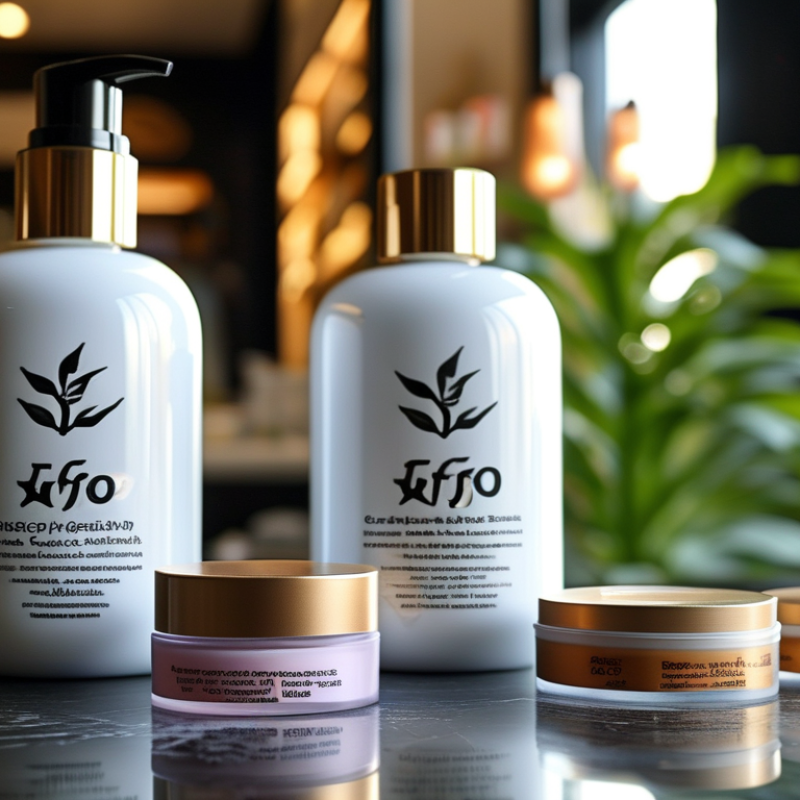
Define Your Product Scope in a Beauty Market Projected at $590 Billion by 2028
How to Choose a Turnkey Cosmetics Manufacturer?
The global beauty and personal care market is projected to approach $590 billion by 2028, according to Statista Market Insights. This scale creates opportunity, but it also creates noise. A clear product scope helps separate a useful manufacturing partner from a costly distraction.
Define the product before requesting quotations. Specify the category, format, target user, texture, fragrance direction, pack size, and expected annual volume. A facial serum needs different testing, filling, and packaging controls than a solid cleanser. Include the intended sales regions, because ingredient rules and labeling requirements differ across markets. Keep claims realistic and evidence-based. “Hydrates dry skin” requires a different support file than a stronger performance claim.
Ask the turnkey manufacturer for evidence, not polished promises. Review its quality system, batch records, stability-testing process, supplier controls, and change-management procedure. Independent reports from McKinsey indicate that beauty growth increasingly depends on premiumization, wellness, and science-backed products. That makes technical documentation valuable, not decorative. Request pilot samples and inspect them after heat, cold, and transport exposure. Small details matter: a loose cap, separated emulsion, or unreadable label can delay launch.
Be honest about uncertainty. Your first forecast may be wrong. Many projects overestimate demand and underestimate packaging minimums. A capable partner should explain trade-offs in formula cost, lead time, testing, and minimum order quantity. The right scope is specific enough to control risk, yet flexible enough to learn from real customer feedback.
How to Choose a Turnkey Cosmetics Manufacturer? - Define Your Product Scope in a Beauty Market Projected at $590 Billion by 2028
| Product scope | Typical format | Primary technical risks | Core quality and safety checks | Key compliance considerations | Scope complexity 1–5 |
Manufacturer capability priority 1–5 |
|---|---|---|---|---|---|---|
| Facial cleansers | Gel, foam, cream, oil or balm | Preservative performance, surfactant irritation, viscosity drift and emulsion stability | Microbiological limits, preservative efficacy testing where applicable, pH, viscosity, appearance and stability | Cosmetic ingredient and labeling rules in the target market; avoid unsupported therapeutic claims | 2 | 3 |
| Moisturizers and serums | Emulsion, anhydrous oil, gel or water-based serum | Active-ingredient compatibility, oxidation, separation, preservative control and packaging interaction | Stability testing, compatibility testing, pH, viscosity, microbial quality and assay of critical ingredients when claimed | Ingredient restrictions, product information file requirements and substantiation for cosmetic claims | 3 | 4 |
| Sun-care products | Lotion, cream, stick, spray or fluid | Uniform dispersion of UV filters, photostability, SPF performance, water resistance and claim accuracy | Stability, microbial quality, viscosity, homogeneity and market-specific SPF/UVA testing | Sunscreen classification differs by jurisdiction; product claims may trigger additional testing or drug requirements | 5 | 5 |
| Color cosmetics | Foundation, concealer, lipstick, gloss, powder or mascara | Color consistency, pigment dispersion, transfer resistance, microbial control and shade matching | Shade approval, heavy-metal and restricted-substance controls where relevant, stability, packaging compatibility and microbiological testing | Permitted colorants, ingredient labeling, eye-area restrictions and market-specific cosmetic regulations | 4 | 4 |
| Hair-care products | Shampoo, conditioner, mask, styling gel or treatment | Surfactant compatibility, deposition performance, viscosity, fragrance stability and packaging leakage | pH, viscosity, microbial quality, stability, fill-weight control and packaging compatibility | Cosmetic versus drug or medical claims; ingredient and allergen-labeling requirements vary by market | 3 | 3 |
| Fragrance products | Eau de parfum, eau de toilette, body mist or solid fragrance | Fragrance oxidation, alcohol handling, flammability, odor consistency and packaging compatibility | Stability, odor evaluation, leakage, spray performance, flammability controls and restricted-allergen review | Transport classification, fragrance-allergen labeling and country-specific ingredient restrictions | 4 | 4 |
| Sensitive-skin and natural-positioned products | Cream, balm, oil, powder or fragrance-free emulsion | Botanical variability, oxidation, preservation, allergen control and restricted formulation options | Supplier qualification, identity and purity documentation, stability, microbial quality and allergen review | “Natural,” “organic,” hypoallergenic and sensitive-skin claims require clear definitions and supporting evidence | 4 | 4 |
FAQS
Specify the product category, format, target user, texture, fragrance direction, pack size, and annual volume. A clear scope prevents mismatched quotations. Include intended sales regions because requirements vary between markets.
Claims determine testing needs and supporting documents. “Hydrates dry skin” needs different evidence from a stronger performance claim. Keep claims realistic, measurable, and supported by available data.
Request quality procedures, batch records, stability reports, supplier controls, and change-management records. Also review traceability from incoming materials to finished cartons. Beautiful presentations are not enough.
Review the current quality certificate, audit scope, expiry date, and issuing organization. Observe trained operators, calibrated equipment, sanitation logs, and controlled production records. A clean facility helps. Documented consistency matters more.
Confirm facility registration readiness, product listing procedures, safety files, responsible-person details, and complaint handling. Ask who submits records and who updates them. Registration is not product approval.
The written plan should cover heat, cold, light, storage periods, opening cycles, and packaging checks. Inspect samples after transport exposure. Look for loose caps, separated emulsions, or fading labels.
Review water monitoring, environmental testing, hygiene controls, cleaning validation, and raw-material quarantine. Each released batch should have traceable dates, equipment status, test results, and corrective actions. Ask what happens after a failed result.
Treat forecasts as estimates, not facts. Demand may be lower than expected, while packaging minimums may be higher. Ask the manufacturer to explain trade-offs among cost, testing, lead time, and order quantity. Some gaps may remain. Honest gaps are easier to manage.
Conclusion
Choosing a turnkey cosmetics manufacturer starts with clearly defining your product scope, target customers, formulas, packaging needs, and launch goals within a beauty market projected to reach $590 billion by 2028. A capable partner should offer reliable Turnkey Cosmetics Manufacturing services that cover development, sourcing, production, filling, packaging, and logistics while matching your desired quality and scale.
Before signing, verify ISO 22716-aligned GMP practices and readiness for applicable FDA MoCRA registration requirements. Compare minimum order quantities, production capacity, scalability, and lead times to ensure the supplier can support both initial launches and future growth. Review stability testing, microbial controls, documentation, and batch-release procedures to confirm consistent product safety and quality. Finally, evaluate pricing transparency, intellectual property ownership, contract terms, payment conditions, and end-to-end supply risks. The right manufacturer should provide clear communication, dependable quality systems, realistic timelines, and a flexible partnership that protects your investment from development through delivery.