
Cosmetics & Skincare Insights

Industry news, formulation innovations, and contract manufacturing guides.

Formulation & Color Trends

Custom lipstick, skincare, and color cosmetic formulation trends.

Technology & Innovation

State-of-the-art automation and cGMP production standards.

Custom Molds & Tooling

Proprietary packaging and tooling solutions for beauty brands.

Turnkey Beauty Solutions

Full-service manufacturing from concept to retail packaging.

0%

Finding the right creamy lipstick manufacturer requires more than comparing glossy samples or factory photographs. Creamy Lipstick Manufacturing combines formulation science, pigment dispersion, filling accuracy, packaging compatibility, and consistent quality control. A formula may feel smooth in a laboratory, yet drag on the lips after storage or soften inside a warm handbag.

Market evidence supports careful supplier selection. Grand View Research’s Lipstick Market Size, Share & Trends Analysis Report identifies premium textures, long wear, and innovative ingredients as important market drivers. Circana’s beauty industry reporting also shows continued consumer interest in makeup performance and premium product experiences. These findings suggest that texture is not a minor detail. It directly influences perceived value, repeat purchases, and product reviews.

A reliable manufacturer should explain its testing process clearly. Ask for stability data, microbial testing, batch records, ingredient documentation, and ISO 22716 or equivalent cosmetic GMP practices. Request pilot samples in several temperatures, including refrigerated and elevated conditions. Check whether the lipstick keeps its shape, releases color evenly, and remains comfortable after several hours.

A glossy sample can mislead.

The formula’s wax-to-oil balance matters. So do pigment loading, emollient choice, mold temperature, and cooling speed. Packaging should also pass compatibility testing, especially when soft formulas contact plastic components. Grand View Research data can describe market direction, but it cannot replace factory audits or independent laboratory results. That is where many buyers become too optimistic. A manufacturer may sound experienced, yet provide weak documentation. Careful questioning reveals the difference between attractive claims and dependable Creamy Lipstick Manufacturing.
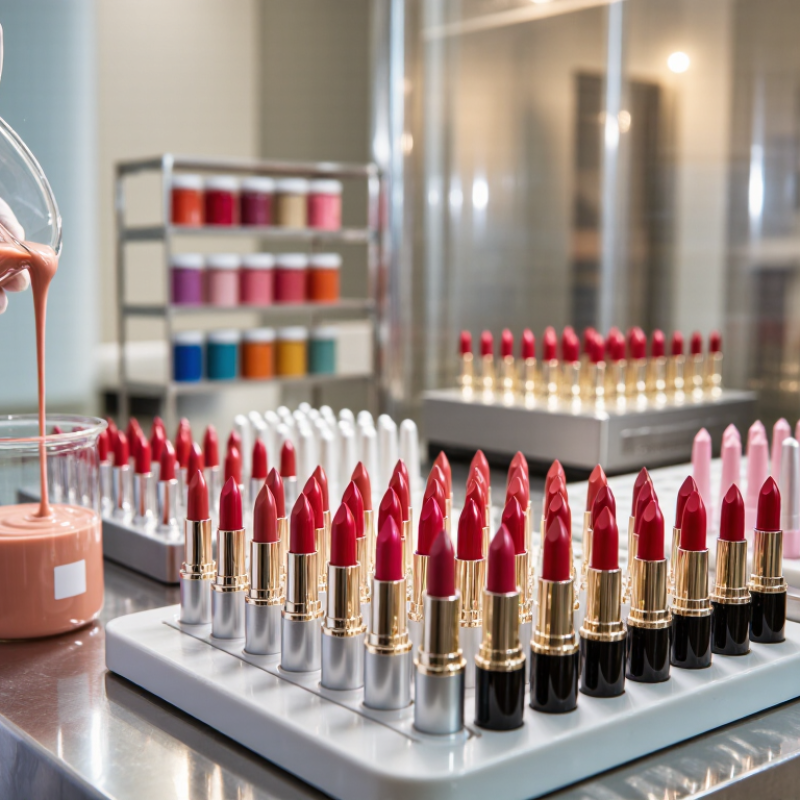
How to Find a Creamy Lipstick Manufacturer?

Define Your Creamy Lipstick Product Requirements

Define Your Creamy Lipstick Product Requirements

Before contacting a creamy lipstick manufacturer, convert your concept into measurable requirements. Describe the texture clearly: buttery, cushiony, lightweight, or high-slip. Specify the finish, coverage, wear time, fragrance level, and expected color payoff. A formula that feels creamy in the laboratory may become waxy after filling. That gap needs testing.

Market data supports careful product planning. Grand View Research estimated the global lipstick market at approximately USD 11.5 billion in 2022, with continued growth projected through 2030. This expansion creates opportunity, but also increases competition. Your brief should identify a clear user benefit, such as comfortable eight-hour wear or smooth application on dry lips. Avoid vague claims. “Moisturizing” requires appropriate testing and evidence.

Ask manufacturers for a sample formula, ingredient list, shade range, minimum order quantity, filling tolerance, and stability data. Request samples in the intended package, because heat can change both texture and color. ISO 22716-based manufacturing controls can help assess production reliability. I would also require compatibility testing between the lipstick base and container. Small details matter. A slightly loose bullet can cause breakage during delivery.

Consumer behavior adds another consideration. Circana reported that U.S. prestige makeup sales grew in 2023, showing continued demand for premium cosmetic experiences. However, premium does not automatically mean better.

Review preservative strategy, pigment dispersion, batch consistency, and customer-use testing before approval. Your first specification may be imperfect. Revise it after real wear trials.

Research and Compare Potential Lipstick Manufacturers

How to Find a Creamy Lipstick Manufacturer?

Research should begin with measurable product requirements, not attractive sample photos. Ask each manufacturer for wax and oil specifications, pigment dispersion details, melting range, stability results, and minimum order quantity. A creamy lipstick should glide evenly, resist sweating, and retain color after repeated use. Request at least three laboratory samples with different emollient levels. Then compare drag, payoff, fragrance, breakage, and surface texture under the same conditions.

Market data provides useful context. Grand View Research valued the global lipstick market at approximately USD 11.5 billion in 2023. Its report also forecasts continued growth through 2030. McKinsey’s State of Fashion: Beauty research projects the wider beauty market could approach USD 580 billion by 2027. These figures suggest strong demand, but they do not guarantee a manufacturer’s quality. Review audited quality systems, batch records, equipment capacity, and corrective-action procedures. Confirm whether testing is performed internally or by an independent laboratory. A polished sample can still hide weak production controls.

Tips: Build a comparison sheet with weighted scores for formula performance, lead time, testing, communication, and cost. Keep packaging and formula comparisons separate. Ask for a pilot batch before signing a large order. My scoring model may still miss cultural preferences or long-term service issues. Recheck assumptions after every sample round. Also compare quotations carefully; a cheaper unit may exclude testing, tooling, or stability work.

How to Find a Creamy Lipstick Manufacturer? - Research and Compare Potential Lipstick Manufacturers

Comparative research table for evaluating creamy lipstick manufacturing partners

Evaluation Dimension Supplier A Supplier B Supplier C Recommended Verification
Core Manufacturing Capability Cream, satin, moisturizing, and sheer lipstick formats Cream, matte, semi-matte, and lip balm-stick formats Cream, satin, metallic, and high-shine formats Request product samples representing each requested finish
Typical Minimum Order Quantity Approximately 3,000 units per shade Approximately 5,000 units per shade Approximately 1,000–2,000 units per shade Confirm whether MOQ applies per shade, formula, package, or total order
Private-Label Support Formula selection, shade matching, packaging, and labeling Custom formulation, component sourcing, filling, and finished-product assembly Stock formulas, custom shades, decoration, and small-batch packaging Ask for a complete list of included and chargeable services
Creamy Texture Development Emphasis on emollient-rich and comfortable glide formulas Emphasis on balanced glide, color payoff, and wear resistance Emphasis on lightweight feel, shine, and buildable coverage Evaluate drag, payoff, settling, sweating, breakage, and comfort after application
Custom Shade Capability Pantone or physical reference matching available Laboratory shade adjustment with color samples Custom shade development subject to pigment availability Request at least three pilot samples and approve a signed color standard
Sample Development Time About 10–20 business days after receiving the brief About 15–25 business days for a custom formula About 7–15 business days for stock-formula modifications Obtain a written timeline covering formulation, revisions, testing, and approval
Bulk Production Lead Time Approximately 30–45 business days after final approval Approximately 45–60 business days after component and formula approval Approximately 25–40 business days for standard packaging Confirm production capacity, component availability, and peak-season delays
Quality Management Incoming material, in-process, and finished-goods inspection Batch records, weight checks, appearance checks, and release inspection Visual inspection, filling checks, packaging checks, and batch sampling Request quality-control procedures, acceptance criteria, and sample inspection reports
Regulatory Documentation Ingredient list, product specification, and safety documentation available on request Technical file support, ingredient documentation, and stability information Basic product specifications and ingredient documentation available Verify documents required for each target market before placing the order
Safety and Stability Testing Stability and compatibility testing can be arranged Stability, packaging compatibility, and microbial-risk assessment support Basic stability evaluation with additional testing available at extra cost Request test scope, duration, laboratory details, and whether testing covers the final package
Certifications and Audits Certification status should be confirmed directly with current documents Certification status should be confirmed directly with current documents Certification status should be confirmed directly with current documents Check current ISO 22716 or equivalent GMP evidence, audit reports, and certificate scope
Packaging Options Standard lipstick tubes, custom colors, printing, and labeling Standard and premium tubes, magnetic closures, and custom decoration Standard tubes, recyclable component options, and simple decoration Check component material, compatibility, decoration durability, and packaging MOQ
Best Fit for Brands seeking a broad range of creamy textures and customization Larger launches requiring structured development and documentation Smaller launches prioritizing lower initial quantities and faster sampling Match supplier capacity and process maturity with launch size and compliance needs
Overall Research Priority High High Medium to High Select only after sample evaluation, document review, factory verification, and a clearly defined quality agreement

Note: Lead times, minimum order quantities, testing services, and certification status vary by formula, packaging, destination market, and order volume. Confirm all figures and documents with each manufacturer before making a purchasing decision.

Evaluate Formulas, Ingredients, and Customization Options

Finding a creamy lipstick manufacturer starts with testing the formula, not admiring a color chart. Request lab samples in warm, neutral, and cool shades. Apply each sample to clean lips and note drag, coverage, shine, and wear after eating. Texture matters. A creamy finish should glide smoothly without feeling oily or collapsing in the tube.

Review the ingredient list with a qualified cosmetic chemist. Look for stable emollients, suitable waxes, approved colorants, and ingredients that support comfort. Ask how the manufacturer controls pigment dispersion, melting points, and batch consistency. Request full specifications, safety documents, stability data, and microbiological testing where relevant. Evidence matters more than confident promises. I once underestimated fragrance strength in a sample, and the final scent felt distracting. That mistake made sensory testing essential.

Customization should cover more than shade selection. Discuss finish, opacity, undertone, refill structure, packaging compatibility, and minimum order quantities. Ask whether the factory can adjust hardness for different climates. A formula that performs well in a cool warehouse may soften during warm shipping. Request pilot batches before approving large production. Compare samples after several weeks, not only on the first day. Small flaws can reveal bigger process problems. Keep written records of revisions, test conditions, and approval standards. This makes communication clearer and supports reliable quality control.

Verify Manufacturing Quality, Certifications, and Production Capacity

Choosing a creamy lipstick manufacturer requires more than reviewing smooth texture samples. Manufacturing quality must be verified on the production floor.

Request samples from different batches, not only one polished prototype. Check glide, coverage, fragrance, melting point, and shade consistency under warm conditions. Ask how the factory controls mixing temperature, filling speed, and cooling time. These details can affect creasing, sweating, and bullet breakage. I have found that batch records often reveal more than sales presentations. However, samples can still hide weaknesses.

Confirm current certifications, such as ISO 22716 or relevant cosmetic GMP systems. Verify the certificate holder, facility address, scope, and expiration date with the issuing organization. Review ingredient traceability, supplier approval, microbiological testing, stability studies, and finished-product release procedures. A reliable manufacturer should provide clear technical documents and explain test results without vague promises. Do not accept copied certificates.

Production capacity also needs practical proof. Ask for monthly output, available filling lines, standard lead times, minimum order quantities, and peak-season limitations. Review whether the factory can produce your required shades without disrupting existing orders. A pilot run can expose delays, filling defects, or inconsistent cooling. It may cost more initially. That cost can prevent larger losses later. During evaluation, I would also inspect contingency plans for equipment failure and raw-material shortages. No supplier performs perfectly, so document weaknesses and ask how they will be corrected.

Request Samples, Review Pricing, and Finalize the Partnership

How to Find a Creamy Lipstick Manufacturer?

Request Samples, Review Pricing, and Finalize the Partnership

A creamy lipstick manufacturer should prove performance before discussing volume. Grand View Research valued the global lipstick market at approximately USD 11.5 billion in 2022. It also forecasts a 6.6% annual growth rate through 2030. This growth increases supplier competition, but it does not guarantee reliable production. Request at least three samples with different wax, oil, and pigment balances. Test them on clean lips, after meals, and under warm storage conditions. Check glide, color payoff, scent, settling, and the appearance of the surface after 48 hours.

Ask for a complete quotation. It should separate formula development, packaging, filling, testing, and freight costs. Compare minimum order quantities, lead times, payment terms, and sample fees. A low unit price can hide expensive tooling or high rejection rates. McKinsey’s 2023 beauty industry analysis projected the global beauty market could reach about USD 580 billion by 2027. That scale rewards efficient sourcing, but pricing still needs evidence. Request batch records, ingredient specifications, and quality-control procedures. Do not rely on attractive presentation alone.

Finalize the partnership with a written specification sheet. Include shade tolerances, texture standards, packaging details, inspection rules, and corrective actions. Confirm who owns the formula and approved artwork. I would also request a pilot batch before placing a large order. It may feel slow. However, no sample can predict every manufacturing variation. One practical weakness is often overlooked: communication delays can damage a launch as much as a poor formula. Set response times and approval deadlines in writing. Use measurable standards, not vague promises such as “luxurious feel.”

How to Find a Creamy Lipstick Manufacturer?

Use this planning reference to organize sample requests, pricing reviews, and partnership decisions. Timelines are shown in business days and should be confirmed with each manufacturer.

Recommended process: Request formula and shade samples first, review pricing and minimum order quantities next, then finalize quality, documentation, production, and communication terms before signing the partnership.

FAQS

What should be included in a creamy lipstick product brief?

Define texture, finish, coverage, wear time, fragrance, and expected color payoff. Use measurable descriptions, such as lightweight glide or eight-hour comfort. Avoid vague promises. A creamy laboratory formula may become waxy after filling, so require testing.

Which samples should be requested from a potential manufacturer?

Request at least three laboratory samples with different emollient levels. Test warm, neutral, and cool shades. Apply them to clean lips and record drag, coverage, shine, fragrance, and wear. Compare samples under identical conditions.

How can formula performance be tested realistically?

Test the lipstick in its intended container. Apply it before meals and check the color afterward. Inspect the surface after several days. A sample can feel perfect on day one, then disappoint later.

What ingredient information should be reviewed?

Request the complete ingredient list, wax and oil specifications, approved colorants, and safety documents. Review the formula with a qualified cosmetic chemist. Ask about pigment dispersion, melting points, stability, and batch consistency. Confident promises are not evidence.

How important is packaging compatibility?

It is essential. Test the lipstick base with the actual container and filling process. Heat may change texture and color. A slightly loose bullet can break during delivery.

What quality documents should a manufacturer provide?

Ask for stability data, microbiological testing when relevant, batch records, and corrective-action procedures. Check whether testing occurs internally or through an independent laboratory. Manufacturing controls based on recognized cosmetic standards can support reliability. Still verify the actual records.

How should manufacturers be compared?

Create a weighted comparison sheet for formula performance, lead time, testing, communication, and cost. Keep packaging costs separate from formula costs. Check whether quotations exclude tooling, testing, or stability work. The cheapest option may not be cheaper overall.

Why are pilot batches necessary before large production?

Pilot batches reveal filling problems, breakage, color variation, and texture changes. Test them across different temperatures and shipping conditions. Review samples after several weeks, not only immediately. My first specification might be wrong. Revisions are useful.

Conclusion

Finding the right creamy lipstick manufacturer begins with clearly defining your product requirements, including texture, finish, shade range, packaging, target market, and expected order volume. A well-prepared specification helps you identify suitable suppliers and compare their capabilities, experience, minimum order quantities, lead times, and communication standards. During your research, pay close attention to whether each manufacturer offers reliable support throughout the development process.

Next, evaluate the formula, ingredients, and available customization options to ensure the lipstick delivers the desired comfort, coverage, durability, and appearance. Verify the manufacturer’s quality-control procedures, relevant certifications, production capacity, testing processes, and documentation. Request samples before making a decision, then assess their performance, packaging quality, consistency, and overall value. Carefully review quotations, including development, production, packaging, and shipping costs, and confirm timelines and payment terms. A clear agreement covering specifications, quality expectations, revisions, and delivery responsibilities can create a strong foundation for a successful Creamy Lipstick Manufacturing partnership.

Julian Mercer

Julian Mercer

Julian Mercer is a seasoned marketing professional dedicated to helping businesses understand complex products, market trends, and practical growth strategies. With a strong background in product marketing, customer research, content development, and digital communication, Julian brings clarity and......