
Cosmetics & Skincare Insights

Industry news, formulation innovations, and contract manufacturing guides.

Formulation & Color Trends

Custom lipstick, skincare, and color cosmetic formulation trends.

Technology & Innovation

State-of-the-art automation and cGMP production standards.

Custom Molds & Tooling

Proprietary packaging and tooling solutions for beauty brands.

Turnkey Beauty Solutions

Full-service manufacturing from concept to retail packaging.

0%

Beauty brands need more than attractive packaging and competitive quotations. They need manufacturing partners with documented controls for production, storage, quality checks, and product traceability. The opportunity is substantial: McKinsey’s 2023 State of Beauty report projected the global beauty market could reach about $580 billion by 2027. Growth brings more supplier choices, but also more responsibility. A polished sample is not enough.

ISO 22716 provides guidelines for good manufacturing practices in cosmetics. It covers practical processes, from handling raw materials to storing finished products. One important distinction: ISO publishes the standard; it does not certify factories itself. Buyers should check the certificate’s scope, issuing body, validity, and named manufacturing site. Ask how batch records are kept, how deviations are investigated, and whether a facility can show recent audit evidence. Details matter. A clean filling line, labeled storage bins, and consistent batch documentation can reveal more than a sales brochure. This guide to ISO 22716 Certified Beauty Manufacturing examines manufacturers in China through those buyer-focused checks. It also considers product range, communication, customization, and export experience. No single factory suits every brand. The right partner should match your formula, order volume, and quality expectations—and be willing to explain its controls clearly.
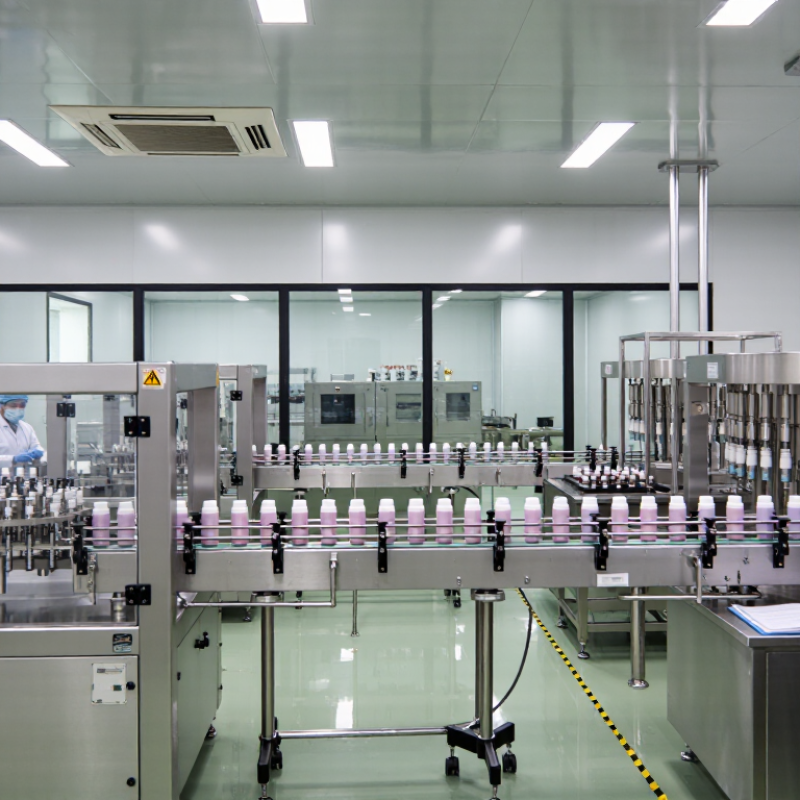
Best ISO 22716 Certified Beauty Manufacturers in China

ISO 22716:2007 Covers 17 GMP Clauses, from Personnel to Documentation

ISO 22716:2007 sets out 17 GMP clauses for cosmetics manufacturing, covering people, premises, equipment, production, quality control, and documentation. A capable manufacturer should make these practices visible on the factory floor, not only in an audit binder. For example, staff should follow clear hygiene rules, equipment should have maintenance records, and incoming materials should be identified and checked before use. Small details matter.

The clauses also connect daily operations with traceability. Batch records should show what was used, when checks occurred, and who approved each step. Procedures for handling deviations, complaints, and product recalls help teams respond consistently. Still, complete paperwork does not guarantee flawless execution. A record may be signed while a work instruction remains unclear, so regular training and practical internal checks are valuable. Ask how the site verifies that written procedures match actual routines.

Tips: Request a recent, redacted batch record and follow its details from material receipt to finished-product release. Check training logs, equipment maintenance records, and change-control procedures. Look for clear answers, not just polished documents.

How ISO 22716 Applies to Cosmetic Production, Control, Storage, and Shipment

ISO 22716 turns cosmetic good manufacturing practice into everyday controls. It covers personnel hygiene, equipment, raw-material handling, production, quality checks, storage, and shipment. In a Chinese factory, this may mean checking incoming oils against specifications, cleaning a filling line, and recording batch numbers before cartons leave the warehouse. The standard provides guidance; it does not guarantee that every product is effective or that every batch is defect-free.

The commercial stakes are significant. McKinsey’s 2023 beauty industry report estimated the global beauty market at about $430 billion in 2022, with roughly 6% annual growth expected through 2027. Cosmetics Europe reported €96 billion in European retail sales for cosmetics and personal care in 2023. These figures show the scale of the market, not proof of any factory’s quality. Buyers should review audit scope, corrective-action records, and traceability from supplier to shipment. Paperwork can look tidy. The shop floor still matters.

Tips: Ask to see a recent batch record and a mock-recall exercise. Check warehouse temperature logs and how damaged cartons are isolated. Confirm the certificate’s scope and validity directly with its issuer. A checklist helps, but it cannot replace a careful factory visit.

Best ISO 22716 Certified Beauty Manufacturers in China - How ISO 22716 Applies to Cosmetic Production, Control, Storage, and Shipment
Evaluation Area How ISO 22716 Applies Practical Controls to Look For Records to Review When Assessing a Manufacturer
Quality management and documentation Cosmetic GMP activities should be defined, documented, implemented, and maintained. Document control and change control support consistent operations. Approved procedures, controlled document versions, defined responsibilities, and a documented process for assessing and approving changes. Quality manual or system overview, current procedures, document-change history, and change-control records.
Personnel and training Personnel involved in cosmetic production and control should have appropriate responsibilities, training, and hygiene practices. Role-based GMP training, hygiene rules, suitable protective clothing, and access arrangements for production areas. Training records, job descriptions or responsibility assignments, and applicable hygiene procedures.
Premises and equipment Facilities and equipment should be suitable for their intended use and maintained to help prevent mix-ups, contamination, and deterioration. Cleanable work areas, appropriate material and personnel flows, equipment identification, cleaning procedures, and maintenance controls. Cleaning and maintenance logs, equipment-use records, and facility or equipment procedures.
Raw materials and packaging materials Materials should be received, identified, assessed, stored, and released or rejected under controlled procedures. Quarantine status before approval, clear status labeling, defined acceptance checks, and segregation of rejected or unsuitable materials. Supplier and receipt records, material specifications, inspection or test results, and release or rejection decisions.
Production and in-process control Manufacturing operations should follow approved instructions, with controls that help ensure the product is made and handled consistently. Batch identification, verified weighing and dispensing, documented processing steps, line clearance, and defined in-process checks. Executed batch manufacturing records, equipment-use records, in-process results, and line-clearance documentation.
Quality control and finished products Quality control activities should establish whether materials and finished products meet defined acceptance criteria before release. Approved specifications, suitable sampling and testing procedures, documented review of results, and authorized product release. Specifications, sampling and test records, certificates or quality results where applicable, and batch-release records.
Nonconforming products and deviations Deviations and products that do not meet requirements should be identified, assessed, documented, and handled under defined procedures. Segregation and status identification, documented investigation, authorized disposition, and corrective actions where appropriate. Deviation reports, nonconformance records, investigation outcomes, and corrective-action follow-up.
Storage and inventory Materials and products should be stored under conditions appropriate to protect their quality and maintain identification and status. Organized, labeled storage; separation of approved, quarantined, and rejected stock; and monitoring of specified storage conditions. Warehouse procedures, inventory and status records, storage-condition logs where applicable, and stock-disposition records.
Shipment and traceability Products should be handled and shipped in a way that preserves their required quality and allows relevant batches to be identified. Shipment checks, suitable packaging and handling instructions, batch identification, and documented dispatch procedures. Dispatch records, batch and quantity details, shipping documentation, and applicable handling or transport records.
Complaints, recalls, and subcontracting Processes should address complaints and recalls, and relevant outsourced activities should be controlled through defined responsibilities and agreements. Complaint assessment, traceability for recall decisions, documented recall procedures, and clear oversight of subcontracted GMP activities. Complaint files, recall procedure and exercise records where available, and quality agreements or oversight records for subcontractors.

Scope note: ISO 22716 provides cosmetic Good Manufacturing Practices guidelines covering production, control, storage, and shipment. A certificate should be checked for its validity, scope, site, and issuing certification body; it does not by itself establish that every product complies with all destination-market regulations or guarantee product safety.

How to Verify a Chinese Manufacturer’s Certificate, Scope, and Audit Status

A certificate image is only a starting point. ISO 22716:2007 provides cosmetics Good Manufacturing Practices guidance; a certificate does not, by itself, prove every product or factory is covered. Ask for the complete certificate and check the manufacturer’s legal name, factory address, issuing body, standard version, scope, and expiry date. The scope should match the work you are buying, such as production, filling, or packaging. A mismatch between the certificate address and the site on your purchase order deserves a clear explanation.

Verify the document directly with its issuer using independently sourced contact details. Confirm whether the certificate remains valid and whether surveillance or renewal audits are current. Request the latest audit date, audit type, and a redacted summary of findings and corrective-action closure. If the issuer claims accreditation, check that claim with the named accreditation body; do not assume every ISO 22716 certificate follows the same accreditation route. Cosmetics Europe’s 2024 market report puts European cosmetics and personal-care retail sales at €96 billion in 2023, underscoring the scale of the supply chain—but market size cannot verify a factory’s controls.

Tips: Ask for a live video walk-through of the named site. Compare visible room labels, batch records, and equipment with the audit scope. Paper checks can still miss operational gaps; an independent site audit may be worthwhile.

Best ISO 22716-Certified Beauty Manufacturers in China by Product Specialty

Product specialty is a practical way to compare ISO 22716-certified beauty manufacturers in China. A factory focused on skincare may handle emulsions, facial cleansers, and lotions every day. Look for suitable mixing vessels, controlled water systems, and clear batch records. Details matter. For haircare, ask about experience with shampoos, conditioners, and thicker masks. Filling speed is useful, but accurate dosing and clean changeovers matter too. Color cosmetics need different checks, such as pigment dispersion and shade consistency. A manufacturer’s ISO 22716 certificate supports good manufacturing practices; it does not prove that every product will perform as intended.

Ask whether the certificate covers the site and activities relevant to your project. Review sample production records, sanitation procedures, raw-material traceability, and how deviations are documented. For a new formula, discuss pilot batches, stability testing, and packaging compatibility before agreeing to larger volumes. One weakness in many supplier comparisons is treating a broad product list as evidence of deep expertise. I would be cautious there. A factory may offer many categories yet have limited experience with a particular texture or package. Clear answers and relevant production examples are more useful than impressive claims.

How to Compare Manufacturers by Quality Systems, MOQ, Capacity, and Lead Time

An ISO 22716 certificate is a useful starting point, not a complete quality assessment. Check its validity, issuing body, and scope, then compare procedures for batch records, staff training, hygiene, deviations, and traceability. Ask to review a redacted batch record or audit checklist. A polished file may not show how consistently routines hold up during a busy production day. Details matter.

Compare minimum order quantity against your launch plan and packaging needs. A low MOQ can help limit excess stock, but confirm whether it applies to each formula, shade, or package type. Ask how much monthly capacity is available for your product, not just the factory’s total output. For lead time, request separate estimates for sampling, raw material sourcing, production, and inspection. Build in time for revisions; an estimate can shift when packaging arrives late. A comparison spreadsheet helps, but its neat numbers can create false certainty if assumptions differ.

Tips: Request the same information from every manufacturer. Ask for recent, relevant examples, and confirm who handles quality issues after production. Check details, not promises.

FAQS

What does ISO 22716 cover in cosmetic production?

It guides hygiene, equipment, raw materials, production, quality checks, storage, and shipment. It supports daily controls, not product promises.

Does certification guarantee every batch is defect-free?

No. It supports good manufacturing practices but cannot guarantee effectiveness or flawless batches. Records still need review.

What records should buyers inspect?

Ask for a recent batch record, raw-material traceability, sanitation procedures, and deviation reports. Paperwork is not enough.

How can buyers assess warehouse handling?

Review temperature logs and ask how damaged cartons are isolated. Check batch numbers before cartons leave the warehouse.

What should buyers check on a certificate?

Confirm its scope, site, relevant activities, and validity with its issuer. A certificate covering another site may not help.

How can buyers assess a factory’s product specialty?

Match its equipment and experience to the formula. Skincare may need controlled water systems and mixing vessels. Details matter.

What checks matter for color cosmetics?

Ask about pigment dispersion and shade consistency. A broad product list alone is weak evidence of deep expertise.

What should happen before a large production order?

Discuss pilot batches, stability testing, and packaging compatibility. I would still hesitate if the factory gives vague answers.

Conclusion

This guide explains how ISO 22716:2007 organizes cosmetic good manufacturing practices into 17 clauses, covering areas such as personnel, facilities, equipment, production, quality control, storage, and documentation. It describes how these requirements apply throughout cosmetic manufacturing, from handling materials and controlling production processes to protecting finished products during storage and shipment. It also outlines practical steps for checking whether a Chinese manufacturer’s certificate is current, confirming that its stated scope matches the products and activities you need, and reviewing available audit information.

To identify the right manufacturing partner, the guide compares suppliers by product specialty and examines how their quality systems support consistent production. It also considers minimum order quantities, manufacturing capacity, and lead times, helping buyers weigh operational fit alongside quality controls. By using these criteria, readers can assess ISO 22716 Certified Beauty Manufacturing options more systematically and prepare focused questions before requesting samples, quotations, or further supplier documentation.

Ethan Caldwell

Ethan Caldwell

Ethan Caldwell is a professional marketing specialist and a trusted voice behind the company’s educational blog. With a strong understanding of the company’s products, customer needs, and evolving market trends, Ethan transforms complex information into clear, practical, and engaging insights for......