
Cosmetics & Skincare Insights

Industry news, formulation innovations, and contract manufacturing guides.

Formulation & Color Trends

Custom lipstick, skincare, and color cosmetic formulation trends.

Technology & Innovation

State-of-the-art automation and cGMP production standards.

Custom Molds & Tooling

Proprietary packaging and tooling solutions for beauty brands.

Turnkey Beauty Solutions

Full-service manufacturing from concept to retail packaging.

0%

Matte Lipstick Manufacturing is the controlled process of turning a cosmetic formula into a consistent, wearable product. It brings together pigments, waxes, oils, and texture modifiers, each chosen for a specific role. Waxes help the lipstick hold its shape, while pigments provide color and coverage. The challenge is balance. Too much powder may create a dry feel; excess oil can weaken the matte finish.

Production usually begins with weighing and blending approved ingredients according to a documented formula. Pigments may be dispersed or milled to reduce visible specks and uneven color. The mixture is then heated, mixed, and checked for consistency before it is poured into lipstick molds. A smooth surface matters. So does the click of a tube that closes securely.

After cooling, sticks are inspected for cracks, color variation, odor, and shape. Teams may also test application, payoff, and stability under defined storage conditions. These checks help identify problems before products reach customers. Exact equipment and test methods vary by formula and manufacturer, so no single process fits every lipstick. That detail is easy to overlook. It deserves attention.

This guide explains the main stages, common ingredients, and quality controls behind matte lipstick production. It also considers practical trade-offs, such as long wear versus comfort. Results depend on careful formulation and repeatable manufacturing, not on one ingredient alone. Manufacturers should rely on qualified cosmetic professionals and suitable, documented testing when developing or producing a product.
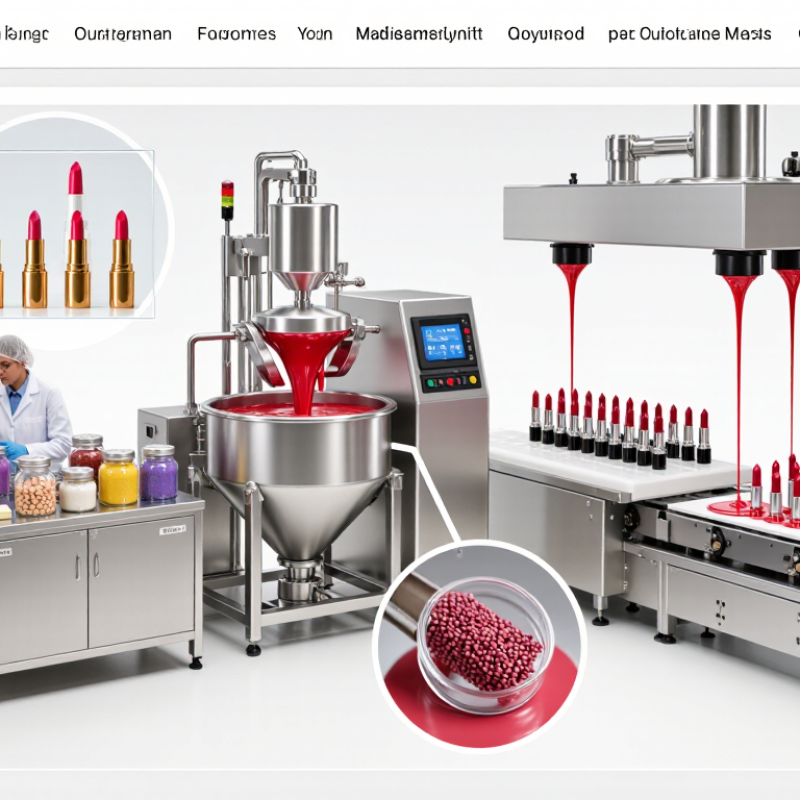
What Is Matte Lipstick Manufacturing and How Does It Work?

What Defines Matte Lipstick and Its Formulation Goals

Matte lipstick is defined by its low-shine finish, not by a single ingredient. Its surface scatters light rather than reflecting it like a gloss. Formulators balance pigments, waxes, emollients, and oil-absorbing powders such as silica or starch. Pigments provide coverage; waxes shape the bullet and help it hold on the lips. Powders reduce shine, but too much can make color drag or emphasize dry patches. That balance is stubborn. A matte finish should feel controlled, not simply dry.

Formulation goals include even color, comfortable glide, low transfer, and a finish that stays visually flat. These aims can compete: more emollient may improve application but add shine, while more powder may dull the finish and weaken comfort. Grand View Research estimated the global lipstick market at USD 9.2 billion in 2023 and projected 5.1% annual growth from 2024 to 2030. Cosmetics Europe reported €96 billion in European cosmetics retail sales for 2023. Neither figure isolates matte lipstick, so they describe market context, not matte-specific demand. In lab development, evaluators typically check payoff, settling into lip lines, wear, and feel after repeated application.

One detail is easy to overlook: a formula can look matte in a sample swatch, then appear shinier on lips as natural oils emerge. That deserves another test.

How Ingredients Create Color, Coverage, and a Matte Finish

Matte lipstick gets its color from pigments, such as iron oxides and approved organic colorants. Pigments must be evenly dispersed through the base; otherwise, streaks or tiny specks may appear on the lips. Manufacturers use controlled mixing and, when needed, milling to break up pigment clusters. Small changes matter.

Coverage depends on pigment concentration, particle size, and how smoothly the formula spreads. Waxes and oils help shape the stick and carry color across the skin. Film-forming ingredients can help the color stay in place, while too much oil may make the finish look glossy. The balance is not always elegant. A formula that feels comfortable may transfer more easily, while a drier one can emphasize flaky areas.

A matte appearance often comes from absorbent powders, including silica or treated mineral powders, which reduce surface shine. The mix must still glide without dragging. During development, technicians check shade consistency, payoff, firmness, and wear on lips or suitable test surfaces. They may adjust the powder-to-oil ratio after observing uneven application or a chalky feel. Not every batch behaves exactly as expected. Temperature and mixing time can affect texture, so manufacturing records and repeat testing help keep results consistent.

What Is Matte Lipstick Manufacturing and How Does It Work?

How ingredients create color, coverage, and a matte finish

This illustrative formula shows the relative share of each ingredient group by weight; actual formulas vary. Waxes give the stick structure, oils and emollients help it glide, and pigments provide color and coverage. Film-forming agents help the color adhere, while powders and matting agents reduce shine and create a softer-looking finish. Minor additives may support stability or add fragrance.

How Matte Lipstick Is Blended, Heated, and Molded

Matte lipstick starts with pigment dispersion, not simply melting colored wax. Manufacturers blend pigments into oils until no dry specks remain, then combine this paste with heated waxes and emollients. Matte formulas often use powders to reduce shine, but too much can make the stick drag or feel chalky. Small changes matter.

The blend is heated until uniform, then mixed to reduce streaks and trapped air. Temperature and mixing time depend on the formula; there is no single reliable setting for every wax system. This step is less tidy than diagrams suggest. Operators check color, texture, and payoff, while batch records support repeatability. Cosmetics Europe’s Market Performance 2024 report valued the European cosmetics and personal-care market at €104 billion; that figure covers many product types, not lipstick alone. It helps explain why consistent production controls matter. ISO 22716 provides cosmetics good-manufacturing-practice guidance, including production and quality-control practices.

The warm mixture is poured into clean molds, cooled, and removed once firm. Uneven cooling can leave pits, cracks, or a soft center, so mold temperature and cooling time need close attention. The bullet is inspected for shape and surface defects before assembly. A quick visual check helps, but it cannot replace recorded batch checks.

How Manufacturers Test Lipstick Quality and Safety

Matte lipstick quality testing begins with samples taken from different points in a production batch. Technicians check color, odor, surface finish, and weight. They also apply the lipstick to a consistent test surface, noting coverage, drag, and whether the color looks even. Small details matter. A slight streak can signal a mixing or filling issue.

Physical tests assess how the bullet performs during use and transport. A measured force test can reveal whether it bends or breaks too easily. Samples may also be stored under warm, cool, and changing conditions to track sweating, cracking, fading, or shifts in texture. Packaging is checked too: the lipstick should twist smoothly, stay in place, and avoid contact with damaged container surfaces. These tests offer useful evidence, but they cannot predict every bathroom, bag, or climate.

Safety checks combine ingredient review with appropriate laboratory testing of finished products. Depending on the formula and manufacturing controls, labs may assess microbial quality and screen for unwanted contamination. Records should connect test results to batch numbers, methods, and corrective actions. A test result is only as reliable as the sampling behind it. Even a product that passes today’s checks may need review if ingredients, equipment, or process conditions change.

How Finished Lipsticks Are Cooled, Inspected, and Packaged

What Is Matte Lipstick Manufacturing and How Does It Work?
How Finished Lipsticks Are Cooled, Inspected, and Packaged

After filling, lipstick bullets need controlled cooling before they can be removed from their molds. Cooling that is too rapid or uneven can leave dents, cracks, or a rough surface. The right cycle depends on the formula, mold, and line conditions, so operators monitor the process rather than rely on one universal temperature. Small defects matter. A tiny split at the tip may worsen when the lipstick is twisted up.

Once cooled, each batch is checked for appearance, dimensions, weight, and smooth operation in its case. Inspectors look for air pockets, uneven color, broken edges, and a bullet that wobbles or sticks. These checks fit the good manufacturing practices described in ISO 22716, which covers production, control, storage, and shipment of cosmetic products. A checklist helps, but it cannot catch every flaw; sampling plans and clear records matter too.

Packaging begins only after products pass inspection. Workers or automated systems place bullets into cases, confirm caps fit securely, and apply labels and batch codes. Cosmetics Europe reported European cosmetics and personal care retail sales of €96 billion in 2023. That market figure is not a manufacturing statistic, but it shows why consistent quality control matters at scale. Packaging should also protect the lipstick from heat, dust, and impact during transport.

What Is Matte Lipstick Manufacturing and How Does It Work? — How Finished Lipsticks Are Cooled, Inspected, and Packaged

The figures below are typical process examples, not universal specifications. Actual cooling conditions, inspection limits, and packaging steps depend on the formula, equipment, package design, and approved quality procedures.

Stage What Happens Typical Conditions or Checks Why It Matters Quality Records
Cooling in the mold Filled molds are cooled until the lipstick mass has solidified enough for release. Cooling time and temperature are set for the formula and mold. A controlled cooling environment may be used; a representative process range is approximately 8–15°C for 10–20 minutes. Even, controlled cooling helps the stick form consistently and reduces the risk of surface defects, cracking, or deformation. Batch number, mold or line identification, cooling settings, and process time.
Demolding and transfer Solidified sticks are removed from the molds and transferred for assembly or further conditioning. Check that sticks release cleanly and remain intact. Handle them in a clean area and avoid excessive heat or pressure. Careful handling helps prevent breakage, dents, smears, and contamination. Demolding checks, line clearance, and any recorded defects or adjustments.
Visual inspection Finished sticks are examined for appearance and obvious physical defects. Look for cracks, air holes, streaks, uneven surfaces, contamination, color variation, and misshapen tips. Inspection frequency follows the approved sampling or in-process plan. Identifies visible defects before the product is placed in its primary package. Inspection results, defect categories, quantities checked, and disposition of rejected units.
Weight and fit checks Units are checked against the product specification and package components. Verify net content using the applicable test method and tolerance. Check that the stick fits the container and that the mechanism moves correctly. Confirms the product meets defined requirements and operates properly in its package. Measured results, sample size, equipment identification, and acceptance decision.
Primary packaging Each lipstick is assembled into its case, and the cap or other components are fitted. Check component presence, closure, alignment, cleanliness, and operation. Confirm that the case does not damage the stick during assembly. Protects the product and ensures the package functions as intended during handling and use. Packaging component lot details, assembly checks, and line reconciliation.
Labeling and coding Required product information and production codes are applied to the package or its label. Verify text legibility, correct artwork version, product identification, and readable batch or lot coding against approved instructions. Supports correct identification, traceability, and compliant presentation. Label and artwork checks, code verification, and reconciliation of issued and used materials.
Cartoning and final inspection Packaged units are placed in cartons or other shipping configurations and checked before release. Confirm correct pack count, carton condition, product-to-carton match, and required shipping information. Final checks follow the site’s quality plan. Helps prevent mix-ups and protects packaged products during storage and distribution. Final inspection results, quantity reconciliation, packaging records, and batch release documentation.

FAQS

What gives matte lipstick its low-shine finish?

Absorbent powders, such as silica or starch, help reduce surface shine. The formula also balances pigments, waxes, and emollients. Not just dryness.

Why can matte lipstick feel dry or drag on the lips?

Too much powder can reduce glide and emphasize flaky areas. More emollient may feel smoother, but can add shine. The balance is tricky.

How does lipstick get even color and coverage?

Pigments must be dispersed evenly through the base. Poor dispersion can leave streaks or tiny specks. Small changes matter.

Why might matte lipstick transfer or become shiny?

Emollients can improve comfort but may increase transfer or shine. Natural oils on the lips can also change how the finish looks. Test it again.

What do quality checks look for?

Technicians check color, odor, weight, coverage, drag, and surface finish. They may also test whether the lipstick bends or breaks too easily.

How is lipstick checked for changes during storage?

Samples may be kept in warm, cool, and changing conditions. Technicians look for sweating, cracks, fading, or texture shifts. Real bags vary, though.

What safety checks may be performed?

Depending on the formula and manufacturing controls, labs may assess microbial quality and screen for unwanted contamination. Results should be linked to batch records.

Why can a sample swatch look different from lipstick on the lips?

Natural oils can make the finish appear shinier after application. A swatch is useful, but it does not tell the whole story.

Conclusion

Matte Lipstick Manufacturing is the process of turning carefully selected cosmetic ingredients into a smooth, richly colored lipstick with a low-shine finish. Manufacturers balance pigments, waxes, oils, and other formulation components to achieve the desired color, coverage, firmness, and comfortable wear. The proportions and properties of these ingredients help determine how evenly the lipstick applies and how its matte finish looks and feels.

Production typically involves blending ingredients and heating the mixture until it is uniform, then pouring it into molds to form lipstick shapes. Once cooled, each product is inspected for consistency, appearance, and structural quality. Manufacturers also conduct appropriate quality and safety checks before the lipsticks are prepared for packaging. Careful control at each stage helps ensure that the finished products have an even surface, maintain their shape, and meet established specifications.

Ethan Caldwell

Ethan Caldwell

Ethan Caldwell is a professional marketing specialist and a trusted voice behind the company’s educational blog. With a strong understanding of the company’s products, customer needs, and evolving market trends, Ethan transforms complex information into clear, practical, and engaging insights for......