
Cosmetics & Skincare Insights

Industry news, formulation innovations, and contract manufacturing guides.

Formulation & Color Trends

Custom lipstick, skincare, and color cosmetic formulation trends.

Technology & Innovation

State-of-the-art automation and cGMP production standards.

Custom Molds & Tooling

Proprietary packaging and tooling solutions for beauty brands.

Turnkey Beauty Solutions

Full-service manufacturing from concept to retail packaging.

0%

Choosing the right Satin Lipstick Manufacturing partner is a commercial decision, not merely a sourcing exercise. The formula must survive heat, transport, repeated opening, and daily use. The bullet should glide smoothly, while the case should protect its tip inside a handbag.

Market demand makes this decision more important. Grand View Research valued the global cosmetics market at approximately USD 343.37 billion in 2023. Its report also projects continued growth through 2030. Circana reported that U.S. prestige beauty sales increased by 8% in 2023. These figures suggest opportunity, but they also raise expectations for consistency, safety, and speed. A growing market does not forgive weak quality control.

This guide presents seven practical tips for evaluating manufacturing partners. It considers formulation expertise, minimum order quantities, pilot samples, production capacity, and packaging compatibility. Reliable suppliers should explain their testing methods clearly. Look for documented batch records, traceability, and quality systems aligned with ISO 22716 cosmetic GMP principles. Ask how they test shade uniformity, melting behavior, microbial quality, and wear performance. Request evidence, not promises.

Small details matter. A lipstick that drags across the wrist may disappoint customers immediately. A loose mold can create uneven edges or inconsistent fill weights. I would also examine how a supplier handles failed batches. Honest answers reveal more than polished presentations.

No partner is perfect. Even experienced factories can miss a target shade or delay components. The strongest partner communicates early, investigates the cause, and records corrective action. Use this framework to compare capabilities carefully, reduce avoidable risk, and build a more dependable lipstick supply chain.
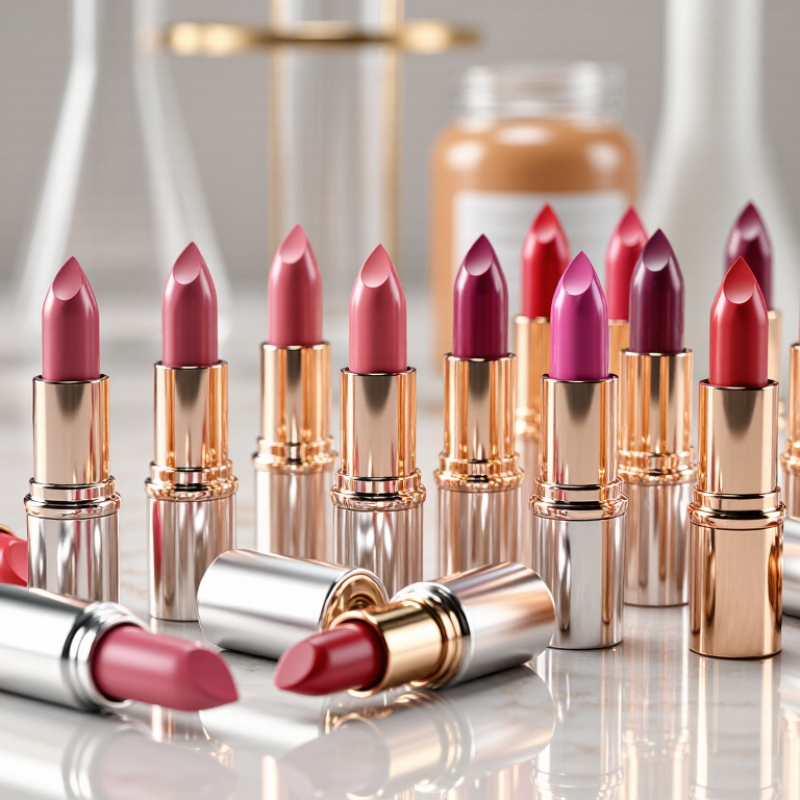
7 Tips for Choosing Satin Lipstick Manufacturing Partners

Define Satin Lipstick Requirements and Partnership Goals

Choosing a satin lipstick manufacturing partner starts with a precise product brief. Define the shade range, finish, coverage, wear time, fragrance, and ingredient preferences. Specify the bullet shape, fill weight, packaging dimensions, and acceptable color variation. A satin formula should glide smoothly, feel comfortable, and leave controlled shine rather than a glossy film. Small details matter. Request a lab sample in the intended package, because texture can change after filling.

Set partnership goals before comparing manufacturers. Decide whether your priority is low minimum order quantities, rapid sampling, stable scale-up, or flexible customization. Include the target cost, launch date, forecast volume, and communication response times. Ask how the partner documents batch records, raw-material approvals, stability checks, and finished-product release. Review quality certifications, audit practices, and required market documentation. Do not rely on polished presentations alone. See the process.

A practical trial order can reveal more than a sales call. Track sample revisions, shade consistency, filling accuracy, carton fit, and delivery condition. Agree on who manages formula adjustments and how deviations are handled. Leave room for honest uncertainty. Early requirement sheets can miss heat exposure during shipping, causing softer bullets than expected. That mistake may change your testing plan. A partner who records problems clearly can be more dependable than one promising perfection.

Evaluate Formulation Expertise and Product Development Capabilities

When selecting a satin lipstick manufacturing partner, study its formulation expertise before reviewing prices. A reliable team understands wax ratios, oil polarity, pigment dispersion, and emollient compatibility. These details control glide, color payoff, shine, and the risk of sweating. Ask for pilot-scale samples, not only laboratory swatches. Watch how the bullet applies after repeated use. It should feel creamy, yet remain firm in a warm handbag. Small tests reveal practical knowledge.

Request evidence of structured product development. The partner should document briefs, formula versions, raw-material specifications, and approval checkpoints. Ask how chemists adjust a shade without changing drag or coverage. They should run stability, heat-cool cycling, microbiological, packaging-compatibility, and wear evaluations. Results must be traceable to batches and test conditions. Clear records matter. They also show whether the team can reproduce a successful formula at production scale.

Evaluate communication during technical revisions. Can the chemist explain why a pigment settles, a fragrance changes perception, or a preservative system needs review? Answers should be precise, not theatrical. Request realistic lead times and defined limits for shade variation, fill weight, and surface finish. No development process is flawless. A promising sample may still crack, soften, or stain the case. Corrective-action records and a transparent rework process deserve close attention. Choose partners who admit uncertainty and test weak points before launch.

7 Tips for Choosing Satin Lipstick Manufacturing Partners - Evaluate Formulation Expertise and Product Development Capabilities

No. Evaluation Dimension What to Evaluate Evidence to Request Practical Benchmark Suggested Score Weight
1 Assess Satin Formula Expertise Confirm that the laboratory understands the balance between creamy application, controlled shine, pigment payoff, comfort, and transfer resistance. Request sample formulas, ingredient functions, texture specifications, and an explanation of how waxes, oils, emollients, film formers, and pigments are balanced. The supplier should be able to explain how formula changes affect drag, melt point, payoff, shine, settling, and after-feel. 20%
2 Verify Pigment Dispersion and Shade Control Evaluate color consistency, pigment wetting, opacity, undertone control, and reproducibility across laboratory, pilot, and production batches. Ask for drawdown or molded-stick comparisons, color-matching procedures, batch records, and instrumental color measurements where available. A capable partner should define an approved master standard and use consistent lighting, substrates, and measurement conditions for shade approval. 15%
3 Review Product Development Workflow Determine whether the partner has a structured process from brief creation and prototype rounds through validation, scale-up, packaging compatibility, and final approval. Request a sample development timeline, stage-gate checklist, prototype change log, approval form, and named technical contacts. The workflow should identify responsibilities, revision limits, required approvals, documentation, and criteria for moving from laboratory batches to pilot production. 15%
4 Test Wear, Stability, and Mechanical Performance Check whether the formula remains uniform and usable during storage, transport, application, and repeated opening and closing. Request stability protocols and results covering elevated and room-temperature storage, freeze-thaw exposure where relevant, odor or color change, sweating, cracking, breakage, and package interaction. Testing should include documented acceptance criteria rather than relying only on visual approval; the exact conditions should match the intended market and packaging. 15%
5 Evaluate Ingredient and Regulatory Knowledge Confirm the partner can select permitted colorants, maintain current ingredient documentation, and support market-specific compliance requirements. Request the INCI list, ingredient specifications, certificates of analysis, allergen information where applicable, safety documentation, and regulatory review procedure. Documentation should be traceable to raw-material suppliers and updated when formula, ingredient status, or target-market requirements change. 15%
6 Confirm Pilot-Scale and Manufacturing Capability Assess whether the production team can reproduce laboratory texture, shade, fill weight, and appearance at commercial scale. Ask for pilot-batch records, equipment details, in-process controls, filling-temperature controls, sampling plans, deviation procedures, and batch-release criteria. The supplier should demonstrate controlled heating, mixing, pigment dispersion, molding or filling, cooling, inspection, and traceability procedures. 10%
7 Measure Communication, IP, and Continuous Improvement Choose a partner that responds clearly, protects confidential formulation information, manages changes responsibly, and can improve the product after launch. Request a communication schedule, confidentiality terms, formulation ownership provisions, change-control process, complaint-handling procedure, and corrective-action example. A strong partner provides written updates, documented corrective actions, realistic lead times, and technical alternatives when an ingredient or process becomes unavailable. 10%
Total Suggested Evaluation Weight 100%
Scoring guidance: Score each dimension from 1 to 5, multiply by the suggested weight, and prioritize partners that can provide verifiable technical records rather than relying only on product samples or marketing claims.

Verify Quality Control Systems, Safety Standards, and Certifications

Choosing a satin lipstick manufacturing partner requires more than reviewing color samples. Verify how quality is controlled from raw material receiving to final packing. Ask for documented procedures, batch records, and trained quality staff. Request recent test reports for microbiological safety, heavy metals, stability, and packaging compatibility.

Ask for evidence. Do not guess.

A reliable facility should follow recognized cosmetic good manufacturing practices, such as ISO 22716 principles. Check whether its certifications are current, relevant, and issued by an independent organization. A certificate alone proves little if daily operations do not match it. During a factory visit, observe clean production zones, labeled materials, calibrated weighing equipment, and controlled storage temperatures. These details often reveal more than a polished presentation.

Traceability is equally important. The manufacturer should identify each ingredient lot, production date, operator, and finished-product batch. Request procedures for handling deviations, complaints, recalls, and formula changes. Safety documentation should include ingredient specifications, allergen information, and regulatory assessments for your target markets. In my experience, suppliers sometimes provide incomplete records or generic test results. That is a warning, though not always a failure. Ask clear follow-up questions and record every answer. A practical trial order can expose weaknesses in shade consistency, filling accuracy, surface finish, or closing performance. Satin formulas may look elegant, but small temperature changes can affect texture and payoff. Insist on defined acceptance standards before signing a long-term agreement.

Compare Customization Options, Minimum Orders, Pricing, and Lead Times

7 Tips for Choosing Satin Lipstick Manufacturing Partners

Compare customization options, minimum orders, pricing, and lead times before signing any agreement. Grand View Research valued the global lipstick market at approximately USD 11.5 billion in 2023. That scale increases supplier choice, but it also hides quality differences. Ask for shade matching, satin finish samples, packaging prototypes, and formula adjustments. A practical test is better than a polished presentation. Request documented stability, compatibility, and microbial testing from an independent laboratory. Do not rely on verbal promises.

Minimum orders can change your cash flow quickly. Compare the minimum order quantity for each shade, not only the total project quantity. Ask whether packaging has separate minimums. Low quantities may carry higher unit prices. High quantities may create slow-moving inventory. Both hurt. Request a detailed quotation covering development fees, tooling, testing, packaging, freight, and payment terms. Industry procurement surveys regularly identify cost transparency as a major supplier-selection factor. Still, the cheapest quote may reflect thinner quality controls.

Lead time needs written milestones. Confirm sample production, revisions, raw-material purchasing, filling, inspection, and shipment dates. A supplier promising 15 days may exclude testing or packaging approval. Build a buffer of at least one to two weeks for revisions. Review production capacity, backup material sources, and batch traceability. The 2024 Deloitte Global Manufacturing Survey highlights resilience and visibility as continuing operational priorities. I would also request a small pilot batch. It may feel inefficient, but it exposes shade variation, bullet breakage, and uneven payoff before a larger order.

Test Product Samples and Confirm Communication and Contract Terms

Tip 1: Test samples under real conditions, not only studio lighting. The global lipstick market was valued at approximately $12.3 billion in 2023, according to Fortune Business Insights. That scale increases pressure for consistent color, texture, and delivery. Request samples from separate production batches. Check pay-off, drag, fragrance, breakage, sweating, and melting after heat exposure. Compare the satin finish in daylight and indoor light. A sample can look perfect and still fail after transport. Use an independent laboratory for stability, packaging compatibility, and safety checks. Confirm the manufacturer follows ISO 22716 cosmetic good manufacturing practices.

Tip 2: Treat communication as a quality-control system. Assign one technical contact and one backup contact. Ask for written replies within an agreed period. Require version-controlled formulas, specifications, test results, and approval records. McKinsey’s 2023 State of Beauty report expects the global beauty market to approach $580 billion by 2027. Fast growth can encourage rushed decisions. Do not let speed replace evidence. A common mistake is approving a shade through informal messages. That decision becomes difficult to defend later.

Tip 3: Put every critical term in the contract. Include color tolerances, ingredient restrictions, minimum order quantities, lead times, inspection rights, rejected-batch procedures, and corrective-action deadlines. Define who owns the formula and testing data. Add advance notice for material, supplier, or process changes. Clarify payment stages, confidentiality, product liability, and dispute procedures. Ask the partner to explain each clause in plain English. If explanations remain vague, pause. Strong communication is useful, but signed terms protect both sides. Revisit the agreement after the first production run.

FAQS

What formulation skills should a lipstick manufacturing partner demonstrate?

The team should understand wax ratios, oil compatibility, pigment dispersion, and emollient balance. These choices affect glide, coverage, shine, and sweating. Request pilot-scale samples. Laboratory swatches are not enough. Test the bullet after repeated use. It should feel creamy but remain firm in a warm handbag.

Which product development records should I request?

Ask for product briefs, formula versions, ingredient specifications, test results, and approval checkpoints. Records should connect results with batches and test conditions. Check how the team adjusts color without changing drag or coverage. Clear records matter. They also reveal weak systems.

What tests are important before approving a satin lipstick?

Request stability, heat-cool cycling, microbiological, packaging-compatibility, and wear evaluations. Test samples from separate production batches. Examine payoff, drag, fragrance, breakage, sweating, and melting. Compare daylight with indoor lighting. Studio lighting can hide problems. It often does.

How can I evaluate a manufacturer’s quality-control system?

Ask for receiving procedures, batch records, trained quality staff, and recent safety reports. Review testing for microbiological safety, heavy metals, stability, and packaging compatibility. During a visit, inspect labeled materials and calibrated scales. Storage temperatures matter. Clean zones matter too.

Why is traceability important in cosmetic production?

Traceability should identify ingredient lots, production dates, operators, and finished-product batches. It supports investigations when color or texture changes. Ask about deviations, complaints, recalls, and formula changes. Generic records are a warning. Not always a failure, but worth questioning.

How should communication be managed during development?

Assign one technical contact and one backup contact. Set written response times. Require version-controlled formulas, specifications, test results, and approvals. Ask precise questions about pigment settling or preservative reviews. If answers sound theatrical, ask for evidence. Slow answers can become expensive.

Which contract terms need clear definitions?

Define color tolerances, ingredient restrictions, minimum order quantities, lead times, and inspection rights. Include rejected-batch procedures and corrective-action deadlines. Clarify formula ownership and testing-data ownership. Add notice requirements for material or process changes. Vague clauses create avoidable arguments.

What should I do if the first production batch looks acceptable?

Do not approve it immediately. Check filling accuracy, surface finish, shade consistency, and closing performance. Compare the batch with approved samples. Review transport and heat exposure results. A successful first run can still hide weaknesses. Revisit the agreement afterward.

Conclusion

Choosing the right partner for Satin Lipstick Manufacturing requires more than comparing basic prices. Start by defining your product requirements, including texture, finish, shade range, packaging, target market, and long-term partnership goals. Then evaluate each manufacturer’s formulation expertise, research and development capabilities, and ability to create stable, comfortable, and high-performing satin formulas. A reliable partner should also demonstrate strong quality control procedures, product safety testing, regulatory awareness, and relevant certifications.

Next, compare customization options, minimum order quantities, pricing structures, production capacity, and lead times to ensure the partnership fits your business plan. Before making a final decision, request product samples and assess their color consistency, application, wear, packaging compatibility, and overall quality. Clear communication is equally important, so confirm response times, revision procedures, payment terms, intellectual property ownership, quality standards, delivery responsibilities, and contract conditions. A careful evaluation of these factors can help you select a dependable manufacturer capable of supporting consistent product quality and sustainable business growth.

Amelia

Amelia

Amelia is a professional marketing specialist with a strong understanding of customer needs, market trends, and product development. As a valued member of the company’s marketing team, she combines strategic insight with practical product knowledge to create clear, useful, and engaging content for......