
Cosmetics & Skincare Insights
Industry news, formulation innovations, and contract manufacturing guides.
Formulation & Color Trends
Custom lipstick, skincare, and color cosmetic formulation trends.
Technology & Innovation
State-of-the-art automation and cGMP production standards.
Custom Molds & Tooling
Proprietary packaging and tooling solutions for beauty brands.
Turnkey Beauty Solutions
Full-service manufacturing from concept to retail packaging.
Top 10 Face Cosmetics Manufacturing Companies Worldwide
Table of Contents
- Industry Scope and Criteria for Selecting the Top Face Cosmetics Manufacturers
- Global Profiles of the Ten Leading Face Cosmetics Manufacturing Companies
- Core Product Categories and Manufacturing Capabilities
- Geographic Reach, Quality Standards, and Innovation Strategies
- Market Influence and Future Trends in Face Cosmetics Manufacturing
- FAQS
- Conclusion
- Related Posts
The global face cosmetics market depends on manufacturers that combine formulation science, efficient production, and dependable quality control. Face Cosmetics Manufacturing involves more than filling jars or pressing powder into pans. It includes ingredient selection, shade development, stability testing, packaging, and batch documentation. These steps shape how a product feels, performs, and reaches consumers safely.
This guide introduces ten leading face cosmetics manufacturing companies worldwide. The selection considers production capacity, research expertise, private-label services, international reach, and documented quality practices. It also examines facilities that support foundations, concealers, blushes, powders, primers, and other complexion products. Clean laboratories, calibrated equipment, and traceable raw materials matter greatly. Small details matter.
However, no single ranking can represent every buyer’s needs. A global brand may value large-scale output, while an emerging label may prefer flexible minimum orders and faster sampling. Sustainability claims also require careful review, especially when suppliers provide limited public evidence. This article therefore encourages readers to compare certifications, audit procedures, formulation support, lead times, and communication standards directly. The strongest manufacturer on paper may not be the best operational match. That deserves reflection.
The companies discussed here reflect different strengths rather than identical business models. Some specialize in high-volume production, while others focus on customized textures, sensitive-skin formulations, or premium packaging. Their capabilities can change as technology, regulations, and consumer expectations develop. Readers should confirm current certifications and service details before making commercial decisions. Reliability is built through evidence, consistent testing, and transparent partnerships—not impressive claims alone.
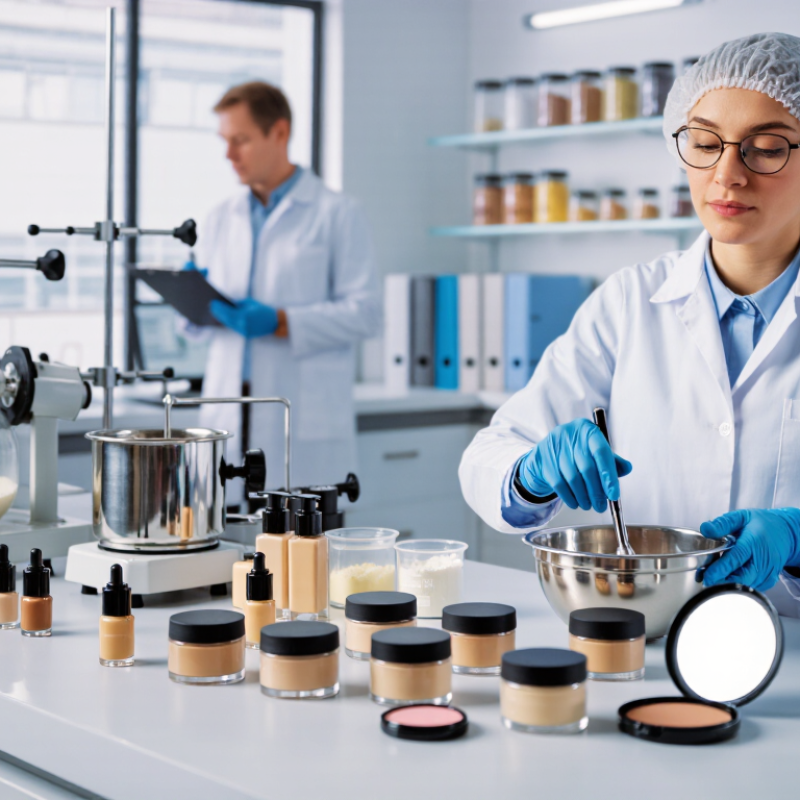
Industry Scope and Criteria for Selecting the Top Face Cosmetics Manufacturers
The global face cosmetics industry covers foundation, concealer, powder, blush, bronzer, and highlighter. It also includes liquid, cream, stick, and pressed formats. Selecting leading manufacturers requires more than checking production volume or export reach. Practical experience matters: a factory should show consistent shade matching, smooth texture, clean filling lines, and stable packaging performance across batches.
Regulatory readiness is a central criterion. Reliable manufacturers maintain documented quality systems, ingredient traceability, microbial testing, stability studies, and heavy-metal controls. They should support compliant labeling and safety files for each target market. Independent audits can verify these claims. Records matter. Manufacturing capacity also deserves careful review. Buyers should examine minimum order quantities, lead times, sample approval procedures, and contingency plans for pigment or packaging shortages. A strong supplier can explain how it manages color variation under different lighting conditions.
Sustainability and ethical sourcing increasingly influence the industry scope. Evaluators may inspect energy use, waste handling, worker protections, and supplier transparency. Technical teams should assess whether a manufacturer can scale a formula without changing its skin feel. Small pilot batches reveal more than polished presentations. No ranking is perfect. A company may excel in mass powder production but struggle with sensitive-skin formulas or rapid customization. That limitation should remain visible when comparing the top face cosmetics manufacturers worldwide.
Top 10 Face Cosmetics Manufacturing Companies Worldwide
Industry Scope and Criteria for Selecting Leading Manufacturers
The global beauty and personal care industry is concentrated in Asia-Pacific, North America, and Western Europe, which together account for the largest share of worldwide demand and manufacturing activity. When evaluating face cosmetics manufacturers, buyers typically prioritize regulatory compliance, GMP-certified production, formulation and testing capabilities, manufacturing scalability, supply-chain reliability, packaging expertise, sustainability, and private-label flexibility.
Regional distribution shown as an industry benchmark based on publicly reported global beauty and personal care market estimates; percentages are rounded and do not represent individual companies or brands.
Global Profiles of the Ten Leading Face Cosmetics Manufacturing Companies
The ten leading face cosmetics manufacturers reflect a highly regional industry. Several major producers operate in East Asia, where advanced emulsions, lightweight sunscreens, and cushion textures are developed at scale. Their laboratories often combine consumer testing with stability studies, checking color, scent, viscosity, and skin feel across changing temperatures.
European manufacturers remain influential in high-performance creams, powders, and sensitive-skin formulas. Many emphasize traceable ingredients, controlled production rooms, and documented quality systems. North American producers often stand out for flexible contract manufacturing, rapid sampling, and support for emerging beauty companies. Their facilities may handle small pilot batches before moving to larger production runs.
Other leading companies are located in Southeast Asia, South Asia, and the Middle East. They frequently adapt face products for humidity, heat, deeper skin tones, and local purchasing habits. This practical knowledge matters. A foundation that performs well in a dry climate may separate quickly in tropical conditions.
Manufacturing strength is not measured by factory size alone. Formula safety, batch consistency, packaging compatibility, and transparent testing records deserve equal attention. Public information is uneven, so some industry rankings require careful verification. Even established producers can face delays, reformulation problems, or inconsistent shade matching. That weakness should not be ignored. Reliable evaluation should compare certifications, technical capacity, regulatory practices, and real production experience rather than marketing language.
Core Product Categories and Manufacturing Capabilities
Top 10 Face Cosmetics Manufacturing Companies Worldwide
Core Product Categories and Manufacturing Capabilities
The leading face cosmetics manufacturers compete through reliable categories and flexible production systems. Their core ranges often include foundation, concealer, primer, blush, bronzer, highlighter, setting powder, and contour products. Each category requires different technical control. Liquid foundations need stable emulsions, accurate pigment dispersion, and smooth filling. Pressed powders demand controlled compression, pan adhesion, and consistent color payoff.
Strong manufacturers can support several formats, including creams, liquids, sticks, cushions, and compact powders. Their facilities may offer shade development, laboratory testing, pilot batches, automated filling, and full-scale production. Batch records, raw material checks, and stability testing improve traceability. Independent quality audits also help confirm dependable processes. However, production capacity alone proves little. A polished sample can still hide weak color consistency or poor packaging compatibility.
Tips: Request recent test reports, sample batches, minimum order details, and production lead times. Check whether the factory can match shades under different lighting conditions. Ask how it handles formula changes and rejected batches. These questions reveal practical capability better than attractive brochures. My own assessment would remain cautious without reviewing manufacturing records, because impressive claims sometimes lack measurable evidence. Seasonal demand can also expose weaknesses in staffing, inventory control, and delivery planning.
Top 10 Face Cosmetics Manufacturing Companies Worldwide - Core Product Categories and Manufacturing Capabilities
Comparative overview based on publicly documented global contract-manufacturing activities, product portfolios, production technologies, and quality-system capabilities. Company identities and brand information are intentionally omitted.
| Rank | Manufacturer Profile | Primary Manufacturing Region | Core Face-Cosmetics Categories | Key Manufacturing Capabilities | Commonly Documented Quality Capabilities |
|---|---|---|---|---|---|
| 1 | Global Manufacturer 01 | Western Europe and North America | Foundations Concealers Powders Blush Highlighters | Large-scale color-cosmetics development; liquid, cream, pressed-powder, and baked formats; shade matching; filling and assembly; primary-packaging integration; global private-label support. | Cosmetic GMP systems, regulatory documentation, stability testing, microbiological testing, and multi-market compliance support. |
| 2 | Global Manufacturer 02 | Western Europe | Liquid Foundation Tinted Moisturizer BB/CC Cream Primer | Specialization in emulsion-based face products; pigment dispersion; high-shear homogenization; airless and pump filling; sensitive-skin and long-wear formulation development. | ISO-aligned quality management, GMP manufacturing, compatibility studies, preservative-efficacy testing, and batch traceability. |
| 3 | Global Manufacturer 03 | East Asia | Cushion Foundation Liquid Foundation Cushion Blush Compact Powder | Advanced cushion systems; mesh and sponge impregnation; lightweight emulsions; compact assembly; high-speed filling; multilayer packaging and export-oriented production. | Cosmetic GMP, in-process controls, shade consistency testing, package-leak testing, accelerated stability testing, and export documentation. |
| 4 | Global Manufacturer 04 | North America | Foundation Concealer Bronzer Blush Face Palette | Flexible small- to large-batch production; liquid and powder color cosmetics; custom shade creation; hot-pour and cold-process systems; filling, labeling, kitting, and fulfillment. | GMP-based production controls, raw-material qualification, finished-product testing, lot traceability, and retailer-specific quality requirements. |
| 5 | Global Manufacturer 05 | Western Europe | Pressed Powder Loose Powder Blush Bronzer Highlighter | Powder formulation and pressing; wet and dry processing; baked powders; surface treatment of pigments; compact filling; pan insertion; decoration and secondary packaging. | GMP manufacturing, pigment and heavy-metal screening, colorimetric testing, pan adhesion checks, drop testing, and stability evaluation. |
| 6 | Global Manufacturer 06 | East Asia and Southeast Asia | BB/CC Cream Tinted Sunscreen Primer Foundation | Emulsion and hybrid skincare-makeup manufacturing; UV-filter formulation support; high-speed tube, bottle, and compact filling; functional-claim testing coordination. | GMP systems, stability and compatibility testing, microbial limits testing, sunscreen-test coordination where applicable, and regional regulatory support. |
| 7 | Global Manufacturer 07 | Southern Europe | Cream Blush Bronzer Highlighter Lip-and-Cheek Products | Color cosmetics using oil, wax, and silicone systems; hot-pour processing; stick and pan formats; custom textures; artisan and industrial batch options. | Cosmetic GMP, raw-material and packaging controls, accelerated stability studies, sensory assessment, and finished-batch release testing. |
| 8 | Global Manufacturer 08 | North America and Latin America | Foundation Concealer Pressed Powder Blush Face Sets | Contract filling and turnkey manufacturing; custom and stock formulas; liquid, cream, and powder processing; automated labeling; assembly and promotional-set packaging. | GMP-based sanitation and production procedures, batch records, quality-control sampling, stability testing, and supply-chain traceability. |
| 9 | Global Manufacturer 09 | East Asia | Cushion Makeup Liquid Blush Primer Setting Powder | Fast product-development cycles; lightweight and water-based formulations; cushion and air-cushion packaging; compact assembly; online shade-development and sampling workflows. | GMP compliance, microbial and preservative testing, shade and viscosity controls, packaging compatibility, and export-market documentation. |
| 10 | Global Manufacturer 10 | Central and Eastern Europe | Foundation Concealer Powder Blush Highlighter | Integrated formulation, filling, and packaging; liquid and powder face makeup; small and medium production runs; vegan and natural-formula development; private-label customization. | European cosmetic GMP practices, safety-assessment support, ingredient traceability, stability testing, packaging compatibility, and regulatory file preparation. |
Note: Manufacturing capabilities, certifications, and regulatory services vary by facility, product type, production site, and project scope. Buyers should verify current certifications, minimum order quantities, testing standards, and market-specific compliance directly with each manufacturer.
Geographic Reach, Quality Standards, and Innovation Strategies
Top 10 Face Cosmetics Manufacturing Companies Worldwide
Geographic reach separates capable manufacturers from merely large factories. Leading producers operate across Asia, Europe, North America, and emerging Middle Eastern markets. This regional network reduces shipping delays and supports local formulation requirements. Grand View Research estimated the global cosmetics market at approximately USD 446 billion in 2023. Its forecast also indicates steady growth through 2030. However, scale alone proves little. A factory may serve many countries yet struggle with seasonal demand or inconsistent raw-material access.
Quality standards remain central to international manufacturing. ISO 22716 provides practical guidance for cosmetic Good Manufacturing Practices, covering hygiene, production, storage, and documentation. Reliable manufacturers usually combine these controls with batch testing, supplier audits, stability studies, and traceable digital records. Small details matter. A clean filling line. A readable batch code. An approved preservative challenge test. Regulatory expectations still differ between regions, which can complicate product launches. Even experienced teams sometimes underestimate language, labeling, or documentation changes.
Innovation now extends beyond new colors and textures. Mintel’s consumer research has repeatedly highlighted demand for multifunctional, skin-supporting, and more transparent products. Manufacturers are responding with lightweight emulsions, refillable packaging trials, low-water formulas, and automated quality inspection. McKinsey has also reported stronger consumer interest in sustainability and personalized beauty experiences. Yet innovation needs evidence. A novel ingredient is not automatically better. In my assessment, the strongest manufacturers balance laboratory data, production experience, and honest claims. Some sustainability targets remain difficult to verify, and that deserves closer scrutiny.
Market Influence and Future Trends in Face Cosmetics Manufacturing
Top 10 Face Cosmetics Manufacturing Companies Worldwide
Market Influence and Future Trends in Face Cosmetics Manufacturing
The leading ten face cosmetics manufacturers influence product quality, pricing, and regional availability. Their strength comes from advanced laboratories, flexible production lines, and strict testing systems. Many now use lightweight textures, refillable packaging, and skin-friendly ingredients to meet changing consumer expectations. Manufacturing experience matters here. A stable emulsion can depend on humidity, mixing speed, and storage temperature.
Market influence is shifting toward transparent sourcing and measurable environmental progress. Manufacturers are investing in water-saving processes, recyclable materials, and shorter supply chains. Digital color matching also helps reduce development time and product waste. However, sustainability claims still need independent evidence. No forecast is flawless. Consumer preferences can change faster than factory planning. This is where professional testing, documented quality controls, and regional regulatory knowledge protect reliability.
Tips: Check testing records, ingredient traceability, and packaging performance before choosing a manufacturing partner. Ask how batches are monitored from raw material receipt to final inspection. Request realistic lead times, not optimistic promises. Small pilot runs can reveal problems with texture, shade, or container leakage. A useful supplier should explain limitations clearly, even when the answer is inconvenient.
FAQS
East Asia leads in lightweight sunscreens, cushion textures, and advanced emulsions. Europe remains strong in creams, powders, and sensitive-skin formulas. North America often supports flexible contract production and pilot batches.
Climate affects texture, stability, and shade performance. A foundation may stay smooth in dry weather but separate in tropical humidity. Local purchasing habits also influence suitable packaging and formulas.
Reliable facilities commonly follow cosmetic Good Manufacturing Practices. They control hygiene, production, storage, and documentation. ISO 22716 offers useful guidance, but certification alone proves little.
Request batch records, stability studies, supplier audits, and ingredient traceability documents. Inspect readable batch codes and packaging tests. Ask for realistic lead times.
Small pilot runs can reveal shade mismatch, texture changes, or container leakage. They also test filling speed and product stability. Small tests matter.
Manufacturers are developing lightweight emulsions, refillable packaging, low-water formulas, and automated inspections. Digital color matching may reduce development time and product waste. New does not always mean better.
No. Claims about recyclable materials or lower water use need measurable evidence. Buyers should request supporting records instead of trusting polished marketing language.
They may experience delays, raw-material shortages, reformulation issues, or inconsistent shade matching. Regulatory language and labeling requirements can also vary between regions. No ranking is perfect.
Conclusion
This article explores the global Face Cosmetics Manufacturing industry, focusing on the standards used to identify leading manufacturers, including production capacity, product quality, research investment, safety compliance, sustainability, and supply chain reliability. It presents a broad overview of ten influential manufacturing companies without emphasizing brand names, examining their capabilities across foundations, powders, concealers, blushes, highlighters, primers, and other complexion-focused products.
The discussion also considers how these manufacturers serve regional and international markets while adapting to evolving consumer expectations. Key themes include advanced formulation technology, efficient production systems, quality control, responsible sourcing, environmentally conscious packaging, and innovation in texture, shade variety, and skin compatibility. By reviewing market influence and emerging trends, the article illustrates how Face Cosmetics Manufacturing is developing toward greater customization, transparency, sustainability, and digital efficiency, while maintaining strict attention to product safety and consistent performance.

Blog Tags: